


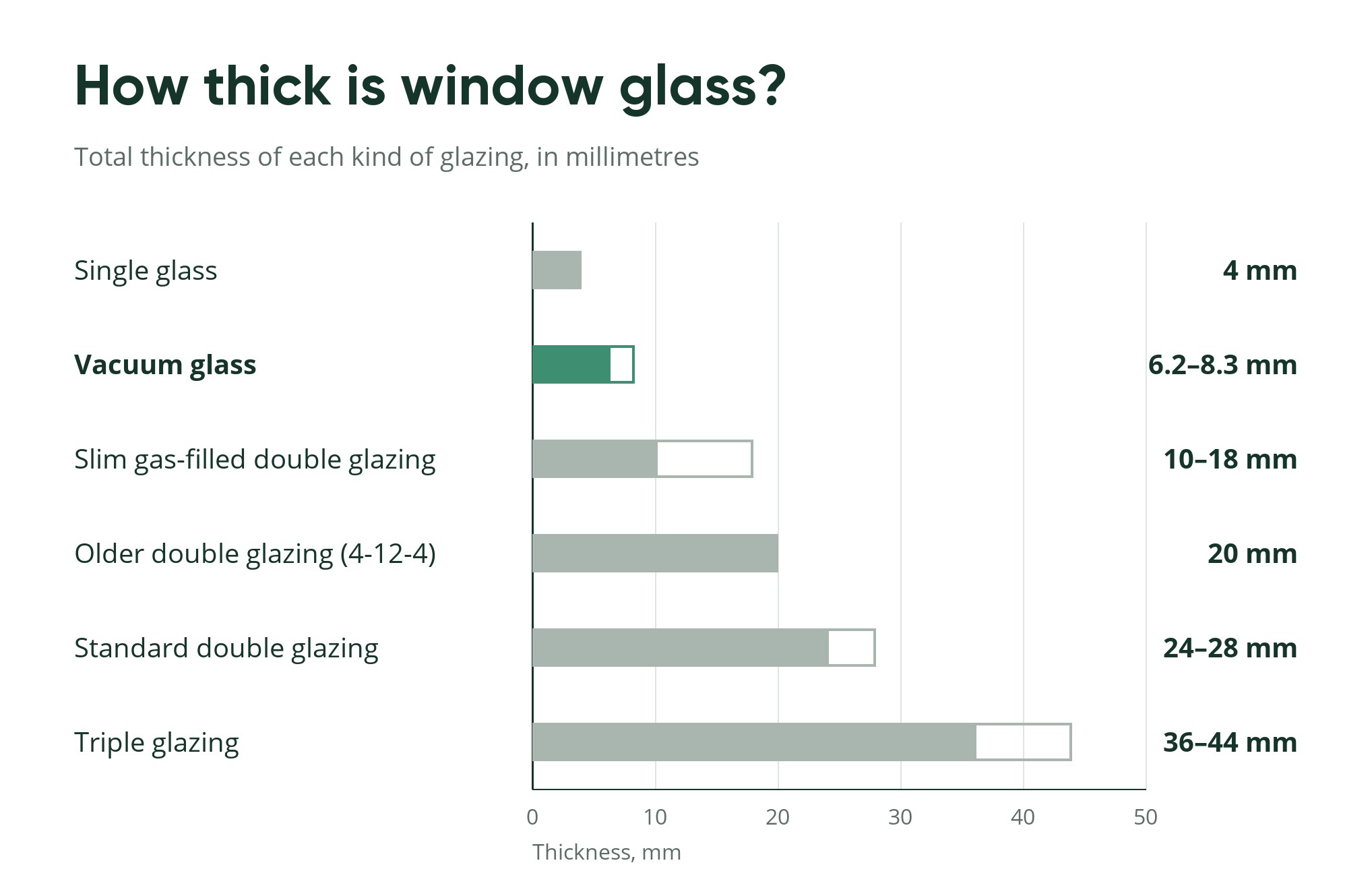
Standard double glazing in the UK is 24 mm or 28 mm thick: two 4 mm panes of glass with a 16 mm or 20 mm gap between them, written 4-16-4 or 4-20-4. Single glass is about 4 mm, triple glazing 36–44 mm, and vacuum glass 6.2–8.3 mm.
Thickness is not what keeps the heat in: the gap, the gas in it and the coating on the glass are. We reglaze original sash windows with vacuum glass, because it is the only double glazing thin enough to fit an original sash. This guide gives the thickness of every kind of glazing, what the numbers mean, and what fits a period window.
| Glazing | Build-up, mm | Total thickness | U-value at the centre of the pane, W/m²K | Glass weight per m² |
|---|---|---|---|---|
| Single glass | One pane | About 4 mm | 5.8 | About 10 kg |
| Older double glazing, air-filled | 4-12-4 | 20 mm | About 2.8 | About 20 kg |
| Modern double glazing, low-E glass and argon | 4-16-4 or 4-20-4 | 24 or 28 mm | About 1.1 | About 20 kg |
| Slim gas-filled double glazing | Thinner panes, narrow gap | 10–18 mm | Varies by unit | About 15–20 kg |
| Triple glazing with argon | 4-12-4-12-4 to 4-16-4-16-4 | 36–44 mm | 0.5–0.6 | About 30 kg |
| Vacuum glass | Two panes, a vacuum of about 0.2 mm | 6.2–8.3 mm | 0.48–1.1, by maker | About 15–20 kg |
Standard double glazing unit sizes
A double glazed unit is described by its build-up: glass, gap, glass, in millimetres. A 4-16-4 unit has two 4 mm panes with a 16 mm gap, 24 mm in all. The common sizes:
| Build-up | Total | Where you find it |
|---|---|---|
| 4-12-4 | 20 mm | Older units, often air-filled, from before about 2002 |
| 4-16-4 | 24 mm | Standard modern units, usually argon-filled with low-E glass |
| 4-20-4 | 28 mm | The size most uPVC frames are now made for |
| 6-12-6 | 24 mm | Larger panes, where thicker glass is needed for strength |
| 6-16-6 | 28 mm | Larger panes and doors |
Most UK uPVC window frames are 70 mm deep and take a 28 mm double glazed unit, or a 36 mm triple glazed one. Timber windows made for double glazing take 24 mm or 28 mm units in deeper rebates than an original window has.
How to measure the thickness of your double glazing
You cannot measure a sealed unit from the face of the glass. Ease off one glazing bead, or look at the edge of the unit where it meets the frame, and measure across both panes with a steel rule. The aluminium or plastic strip between the panes, the spacer bar, is often printed with the maker and the date the unit was made, which tells you its age.
Does thicker glass insulate better?
Hardly. Glass conducts heat well, so an extra 2 mm of glass adds about 0.002 m²K/W of resistance, against roughly 0.9 for a whole modern unit. A 6 mm pane and a 4 mm pane insulate almost exactly the same. What makes the difference is what sits between the panes:
- The gap. Wider is better up to about 16–20 mm; beyond that the gas starts to circulate and carry heat.
- The gas. Argon insulates better than air, which is why modern units are argon-filled.
- The coating. A low-emissivity (low-E) coating on one pane reflects heat back into the room.
- A vacuum. With no gas at all, heat can hardly cross the gap, so the unit can be very thin.
Thicker glass does matter for strength, in large panes and doors, and for noise: panes of different thickness on each side of the gap let less sound through than two equal ones. That is why the original single glass in an old sash, at about 4 mm, does little to stop either heat or noise.
Single glass in old and listed windows
The glass in an original sash window is usually about 4 mm thick, a single sheet between the room and the weather. At 5.8 W/m²K it lets out around five times the heat of modern double glazing, it is the coldest surface in the room, and it is where winter condensation forms (see black mould on windows).
On a listed building, any kind of double glazing needs listed building consent before work starts; like-for-like repairs to the timber do not. In a conservation area, check your council’s rules.
Triple glazing thickness
Triple glazing adds a third pane and a second gap: 36 mm for 4-12-4-12-4, 44 mm for 4-16-4-16-4. With argon it reaches 0.5–0.6 W/m²K at the centre of the pane, but it weighs about 30 kg per square metre of glass, half as much again as double glazing, and needs frames made for it. It will not go into an existing timber window.
Vacuum glass: double glazing as thin as single
Vacuum insulated glazing (VIG) has two panes held a fraction of a millimetre apart by tiny pillars, with the air pumped out and the edges sealed. With no gas to carry heat across the gap, it insulates like double or triple glazing at a quarter of the thickness or less. The makers’ figures:
| Glass | Thickness | U-value at the centre of the pane |
|---|---|---|
| Pilkington Spacia | 6.2–6.5 mm | 1.1 |
| FINEO | 7.7 mm | 0.7 |
| LandVac | 8.3 mm | 0.48 |
At 0.48–0.7 the thicker units are on a par with triple glazing, at under a quarter of its thickness. More on how it works in our vacuum double glazing guide, and how the figures compare in U-values for windows.
What fits an original sash window?
A wooden sash is usually about 40 mm thick, and its glass sits in a shallow rebate, a step cut into the timber and sealed with putty. On a standard 44 mm sash the rebate is 16 mm wide. Vacuum glass, at about 8 mm, needs it deepened by about 3 mm, still clear of the moulding on the room side, so it goes into the sash you already have: we reglaze sashes as thin as 35 mm and keep about 90% of the original glazing bars.
A 24–28 mm double glazed unit would need the rebate cut back almost to the room-side face, through the moulding, so it cannot fit. Slim gas-filled units of 10–18 mm are usually still too deep without cutting deeper rebates or making new sashes.
Two panes weigh about twice as much as the old single glass, so the sash is restored first and its weights rebalanced, with new cords and draught-proofing at the same time. With the restoration it starts at £1,050 a window, usually £1,050–£1,550, with a 15–25-year guarantee on the glazing; the glass takes 8–16 weeks from order, and our minimum is five windows. More on sash window double glazing.
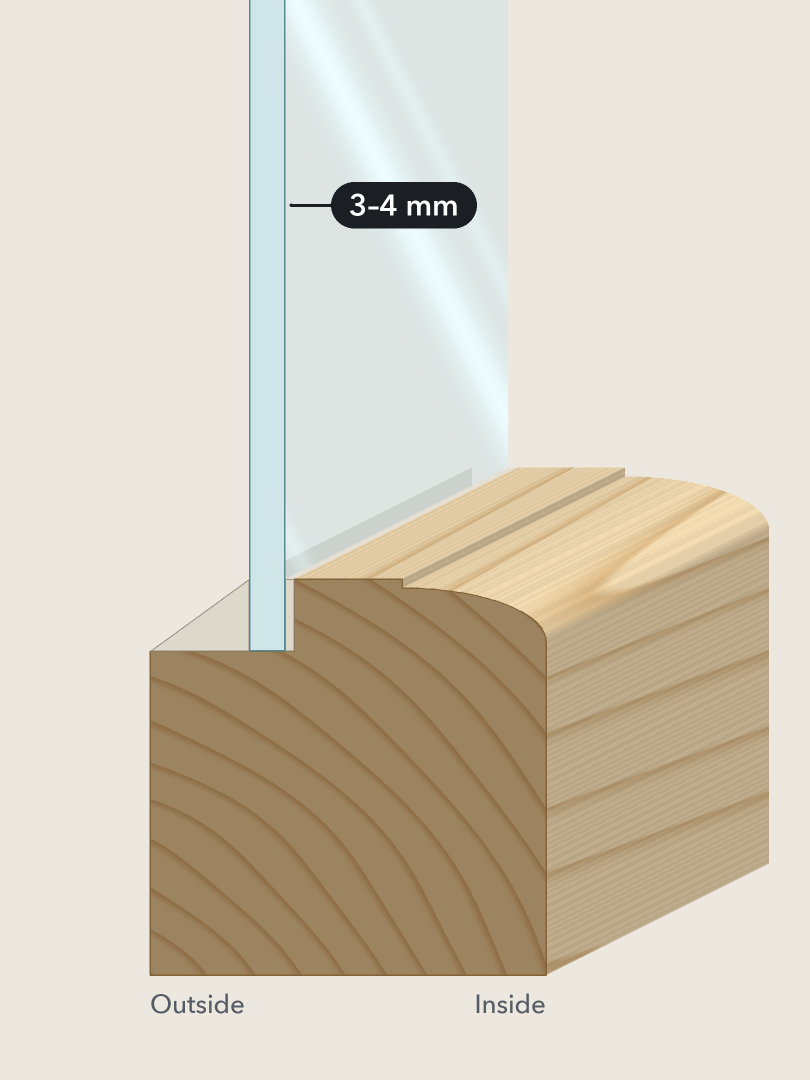
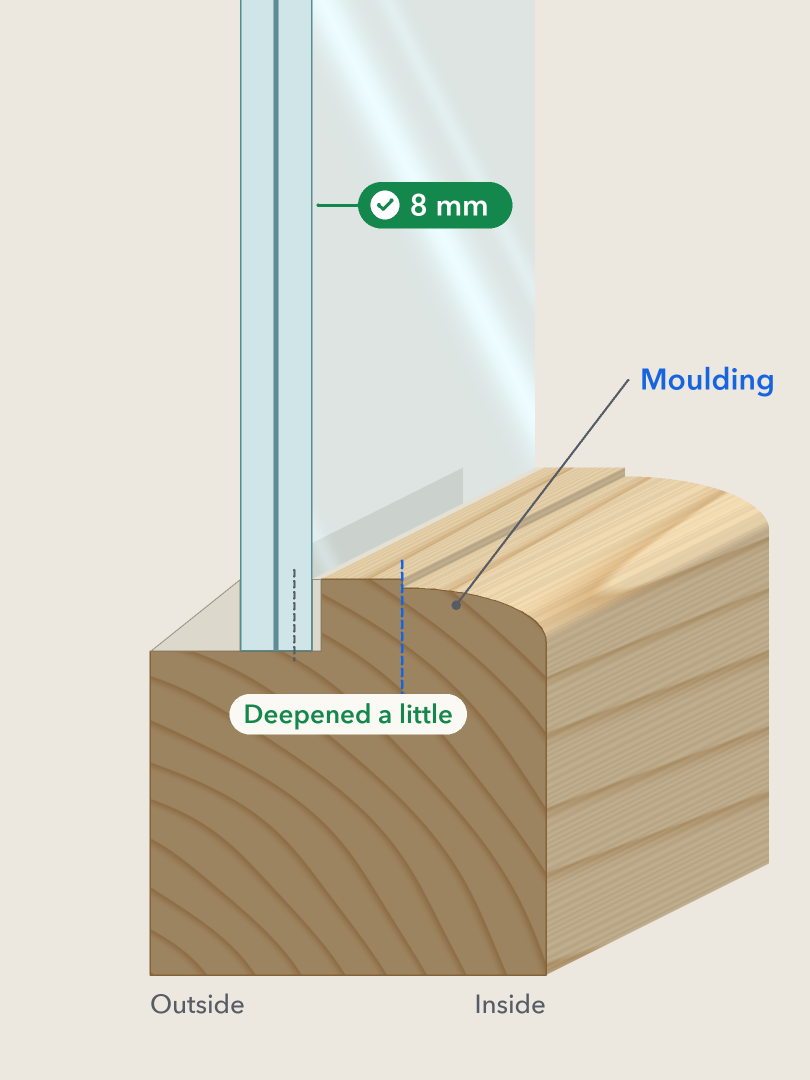
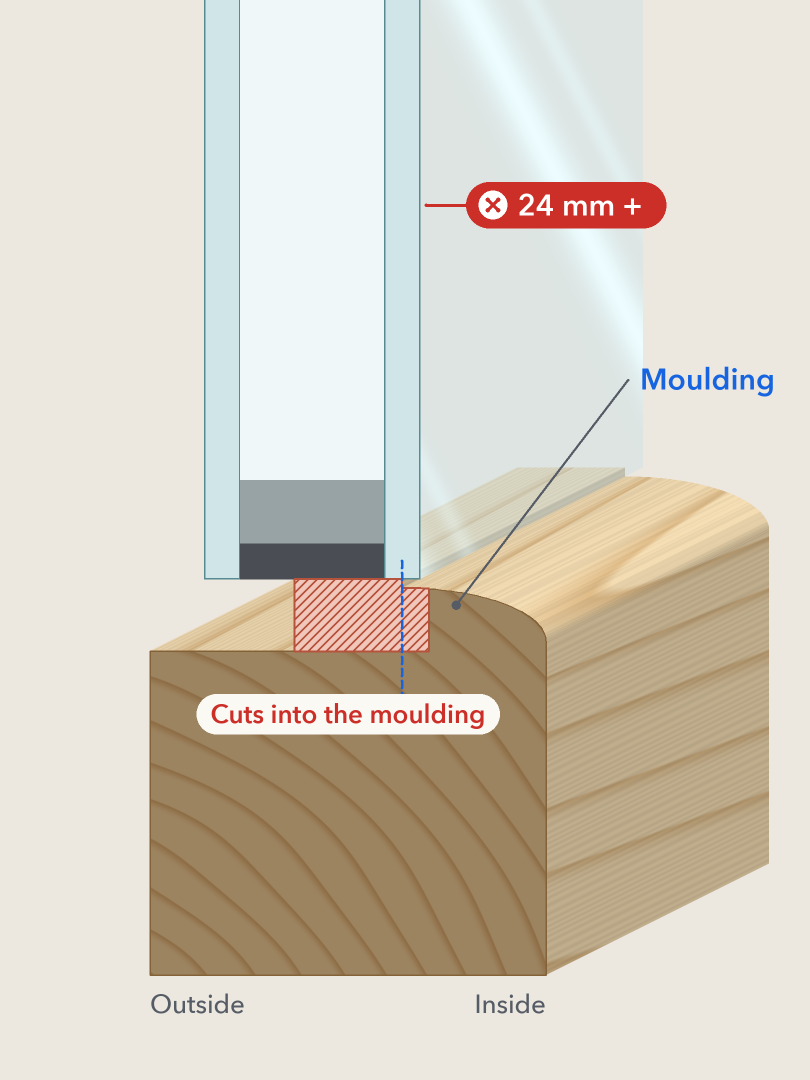
Drawn to scale on a standard 44 mm sash: vacuum glass needs the rebate deepened a little; a 24 mm unit would cut into the moulding.
From our jobs
We have fitted more than one make of vacuum glass. In Godmanchester the windows were reglazed with Pilkington Spacia, and the thermal camera showed minimal heat from them afterwards; in St Neots, Cambridgeshire, in November 2021, the reglazed windows also showed little heat. The photos are in our thermal imaging case studies.
Safety glass: where the regulations decide
In some places Building Regulations require safety glass, toughened or laminated, whatever its thickness. Approved Document K calls them critical locations:
- glazing in a door, up to 1,500 mm above the floor
- glazing within 300 mm of the edge of a door, up to 1,500 mm above the floor
- any other glazing within 800 mm of the floor, such as a low window or a full-height pane
When we reglaze, toughened or laminated glass goes into any pane in those positions.
Frequently asked questions
How thick is standard double glazing?
24 mm or 28 mm in the UK: two 4 mm panes with a 16 mm or 20 mm gap, written 4-16-4 or 4-20-4. Most new uPVC windows take 28 mm units. Older double glazing from before about 2002 is often 20 mm (4-12-4).
What is the gap between the panes of double glazing?
Usually 16 mm or 20 mm in modern units, filled with argon; older units often have a 12 mm air gap. A wider gap insulates better up to about 16–20 mm, after which the gas starts to circulate. Vacuum glass has a gap of about 0.2 mm.
Is 24 mm double glazing good?
Yes, if it has argon in the gap and a low-E coating: a 4-16-4 unit like that is about 1.1 W/m²K at the centre of the pane. A 28 mm unit performs about the same; the extra width mostly suits the frames it is made for.
Is 6 mm glass better than 4 mm?
For insulation, no: two extra millimetres of glass make almost no difference to the U-value. Thicker glass is stronger, which matters for large panes and doors, and it helps a little with noise, especially when the two panes differ in thickness.
How thick are uPVC window frames?
Most UK uPVC frames are 70 mm deep, made to take a 28 mm double glazed unit or a 36 mm triple glazed one. Deeper profiles exist for triple glazing in new, low-energy houses.
How do I know how thick my window glass is?
Measure across the edge of the unit with a steel rule, with a glazing bead eased off, or where the unit meets the frame. Single glass in an old window is usually about 4 mm; a double glazed unit is usually 20, 24 or 28 mm.

