


A window’s U-value is how much heat passes through it: the watts lost through each square metre for every degree of difference between inside and out, written W/m²K. The lower the U-value, the warmer the window.
At the centre of the pane, single glass is about 5.8, a modern double-glazed unit about 1.1, triple glazing 0.5–0.6 and vacuum glass 0.48–0.7. A replacement window in England has to reach 1.4 for the whole window under Building Regulations.
We reglaze original sash windows with vacuum glass and have photographed the results with a thermal camera on our own jobs. This guide explains what the numbers mean, which ones to compare, and what they do and do not tell you.
What is a U-value?
A U-value, or thermal transmittance, measures how fast heat passes through a building element. Its unit, W/m²K, reads as watts per square metre per kelvin: how many watts flow through one square metre when the inside is one degree warmer than the outside (a kelvin is the same step as a degree Celsius).
Lower is better. A window at 1.0 lets through half the heat of a window at 2.0 in the same weather. The opposite measure, the R-value, is simply 1 ÷ U and is used more for walls and insulation. American sites quote a “U-factor” in imperial units: multiply it by 5.678 to get W/m²K, so a U-factor of 0.26 is about 1.48.
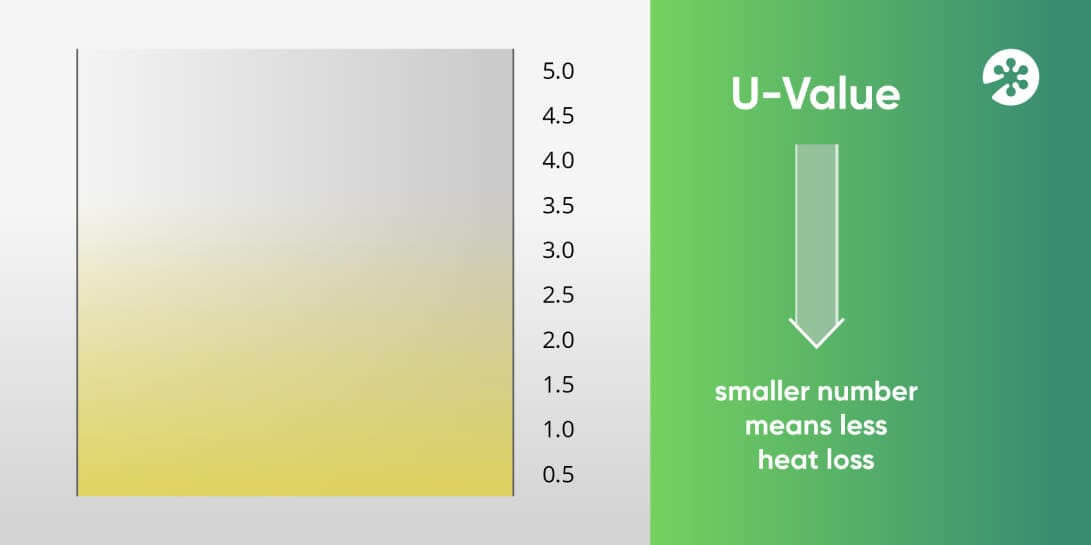
U-values of different glazing
For the glass alone, measured at the centre of the pane, these are the figures to compare:
| Glazing | Thickness | U-value | Heat lost per m² at 20°C inside, 0°C out |
|---|---|---|---|
| Single glass | About 4 mm | 5.8 | About 116 W |
| Modern double glazing, low-E with argon | 24 mm (4-16-4) | 1.1 | About 22 W |
| Triple glazing with argon | 36–44 mm | 0.5–0.6 | 10–12 W |
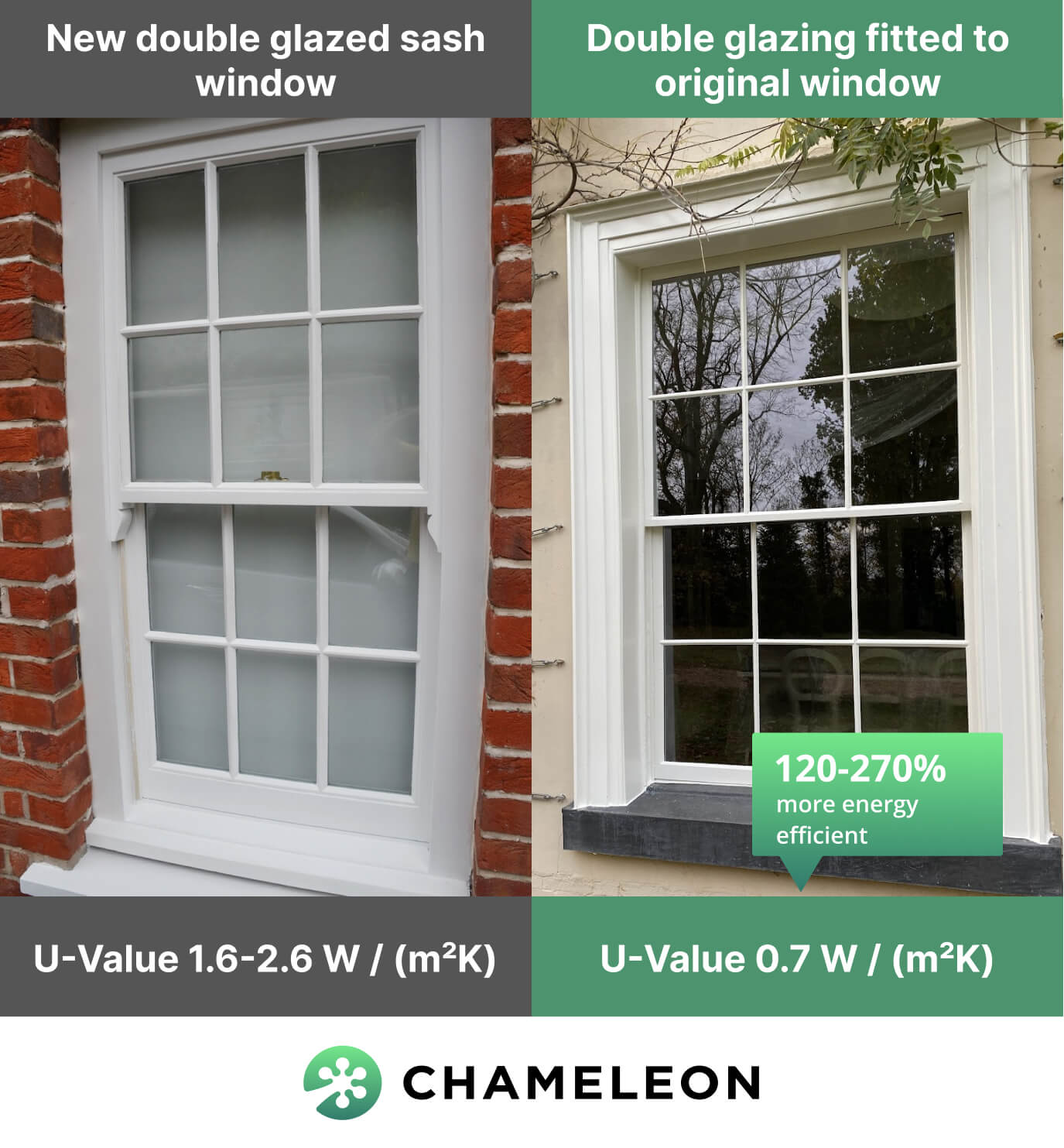
| Vacuum glass (vacuum insulated glazing) | About 8 mm | 0.48–0.7 | 10–14 W |
Vacuum glass is on a par with triple glazing at a quarter of its thickness or less, and lets out about a tenth of the heat that single glass does. Secondary glazing, a second window fitted inside the original, is usually rated as a whole window: 2.9 for ordinary glass and 2.2 with low-E glass in the defaults used for EPCs.

How much heat does a window lose? A worked example
Heat loss through glass is simply U-value × area × temperature difference. Take a house with ten sash windows, each with about 1.2 m² of glass, so 12 m² in all, on a winter day with 20°C inside and 0°C outside:
- Single glass (5.8): 5.8 × 12 × 20 = about 1,390 watts, the output of a small electric heater running just to replace what leaks through the glass.
- Modern double glazing (1.1): about 260 watts.
- Vacuum glass (0.48–0.7): about 115–170 watts.
The real figure also depends on the frames, the draughts round the sashes and how long the heating runs, so treat this as a comparison between kinds of glass, not a prediction of your bill. It does show why the glass matters most in an old window: it is the largest area and the weakest part.
Centre of the pane or the whole window?
Glass makers quote Ug, the U-value at the centre of the pane. A whole window, Uw, also includes the frame (Uf) and the edge of the glass where the spacer and frame meet it (ψg, psi-g). The European standard EN ISO 10077-1 combines them by area:
Uw = (Ag × Ug + Af × Uf + lg × ψg) ÷ (Ag + Af), where Ag and Af are the glass and frame areas and lg the length of the glass edge.
So the same glass gives a different whole-window figure in a slim timber sash than in a wide uPVC frame. When you compare windows, compare like with like: Ug with Ug, or Uw with Uw. Building Regulations and EPCs use the whole window; glass makers and most comparison charts use the centre of the pane.
Frames. Timber is a natural insulator. uPVC and metal frames used to lose a lot of heat; today’s uPVC and thermally broken aluminium are far better, though a metal frame still conducts more than timber. A sound timber frame is a good start for any glazing.

U-values by age: what your windows are worth on an EPC
An Energy Performance Certificate does not measure your windows. The assessor records each window’s type and when it was glazed, and the software (RdSAP 10, in use since June 2025) assumes a whole-window U-value from that:
| Windows | U-value |
|---|---|
| Single glazing, any age | 4.8 |
| Double glazing fitted before 2002 | 2.7–3.1 |
| Double or triple glazing fitted 2002 to 2021 | 2.0 |
| Double or triple glazing fitted from 2022 | 1.4 |
| Secondary glazing, ordinary glass | 2.9 |
| Secondary glazing, low-E glass | 2.2 |
Two things follow for old windows. Double glazing put in 20 or more years ago is worth 2.7–3.1 on an EPC, close to twice a new window. And there is no “vacuum” option on the list: vacuum glass fitted into an existing sash is recorded as double glazing, and if it went in from 2022 it takes 1.4, the same as a brand-new window. Keep the paperwork from any glazing work, because an assessor can only use a better figure with documentary evidence, and only a whole-window one.
What is a good U-value for windows?
- 1.4 or less, whole window: what Building Regulations ask of a replacement window in England (or a Window Energy Rating of B). It is the minimum for new windows, not a stretch.
- 0.8 or less: Passive House standard for the whole window, usually triple glazing in an insulated frame.
- For an existing period window: most of the heat goes through the glass. Single glass is about 5.8 at the centre of the pane; vacuum glass brings that to 0.48–0.7 without changing the frame.
U-value or Window Energy Rating?
A U-value measures one thing: how much heat leaks out. A Window Energy Rating, the A++ to E label on new windows, combines three: the U-value, the g-value (how much of the sun’s heat comes in through the glass) and the L-factor (how much air leaks round the opening parts). A window can have a good U-value and a weaker rating if it lets in little sun or leaks air, which is why Building Regulations accept either a U-value of 1.4 or a rating of B for a replacement window.
Building Regulations and U-values
Replacing a whole window in an existing home in England needs a whole-window U-value of 1.4 or a Window Energy Rating of B (Approved Document L, 2021). The easier 1.6 allowed for timber windows ended in June 2023. Single-glazed replacement windows would not meet this; the rules are set out in is it illegal to have single-glazed windows?
Reglazing an existing frame is different. Approved Document L says that replacing the glazing, or a window in its existing frame, is not a “controlled fitting”, so it does not have to meet the 1.4 standard. Safety glazing rules still apply where glass is low or near doors.
Listed buildings need listed building consent for any double glazing before work starts. Historic England’s guidance says slim or vacuum double glazing within historic frames will generally be acceptable where the original glazing bars are kept, unless the window has historic glass worth keeping, leaded lights, or bars too slender to carry the units. In a conservation area, check your council’s rules.
Renting out a property with single-glazed windows
Single glazing is legal in a rented home, but since April 2020 a landlord in England and Wales cannot let a property with an EPC below E without a registered exemption. The government has confirmed a move to EPC C by 1 October 2030, with a cost cap of £10,000, but that rule is not law yet. Better windows can help an EPC, though the heating system and insulation usually move the score more than glazing does.
Secondary glazing, slim double glazing or vacuum glass?
For an original timber window there are three ways to cut heat loss through the glass:
| Option | How it works | U-value | Original sash |
|---|---|---|---|
| Secondary glazing | A second, separate window fitted inside the original | 2.9, or 2.2 with low-E glass (whole window) | Kept, with a second frame inside |
| Slim double glazing | Gas-filled units 10–18 mm thick | Varies by unit | Usually too deep for an original sash without cutting deeper rebates or making new sashes |
| Vacuum glass | Two panes with a vacuum between, about 8 mm thick | 0.48–0.7 at the centre of the pane | Kept, reglazed in its own sashes |
Secondary glazing is the least intrusive for a listed building: Historic England expects listed building consent to be unlikely for most secondary glazing, while double glazing of any kind in a listed window needs consent first. The trade-offs are explained in sash window secondary glazing, double-glazed sash windows and retrofitting single-glazed windows.
Why a lower U-value means less condensation
Condensation forms when warm, damp room air touches glass colder than its dew point. The lower the U-value, the warmer the inside face of the glass stays. With 20°C inside and 0°C outside, the inside of single glass sits at about 5°C, while vacuum glass at 0.7 stays at about 18°C (using the standard inside surface resistance of 0.13 m²K/W). Room air at 20°C and 60% humidity condenses on anything below about 12°C, so it runs down single glass and not down vacuum glass.
Ventilation still matters, and a cold frame or a draughty gap can still collect moisture. More in window condensation: causes and how to reduce it.
What vacuum glass does to an old sash window
Standard double-glazed units, 24–28 mm thick, do not fit an original sash, and slim gas-filled units of 10–18 mm are still too deep. Vacuum glass is about 8 mm, so it goes into the sash you have: we reglaze sashes as thin as 35 mm, and most wooden sashes are around 40 mm. The glass at the centre of the pane drops from about 5.8 to 0.48–0.7, and we keep about 90% of the original glazing bars.
The sash is restored first, because it has to carry the heavier glass, and draught-proofing seals go in at the same time so warm air does not leak round the sashes. With the restoration it starts at £1,050 a window, usually £1,050–£1,550, with a 15–25-year guarantee on the glazing. More on our sash window double glazing page, or the vacuum double glazing guide.
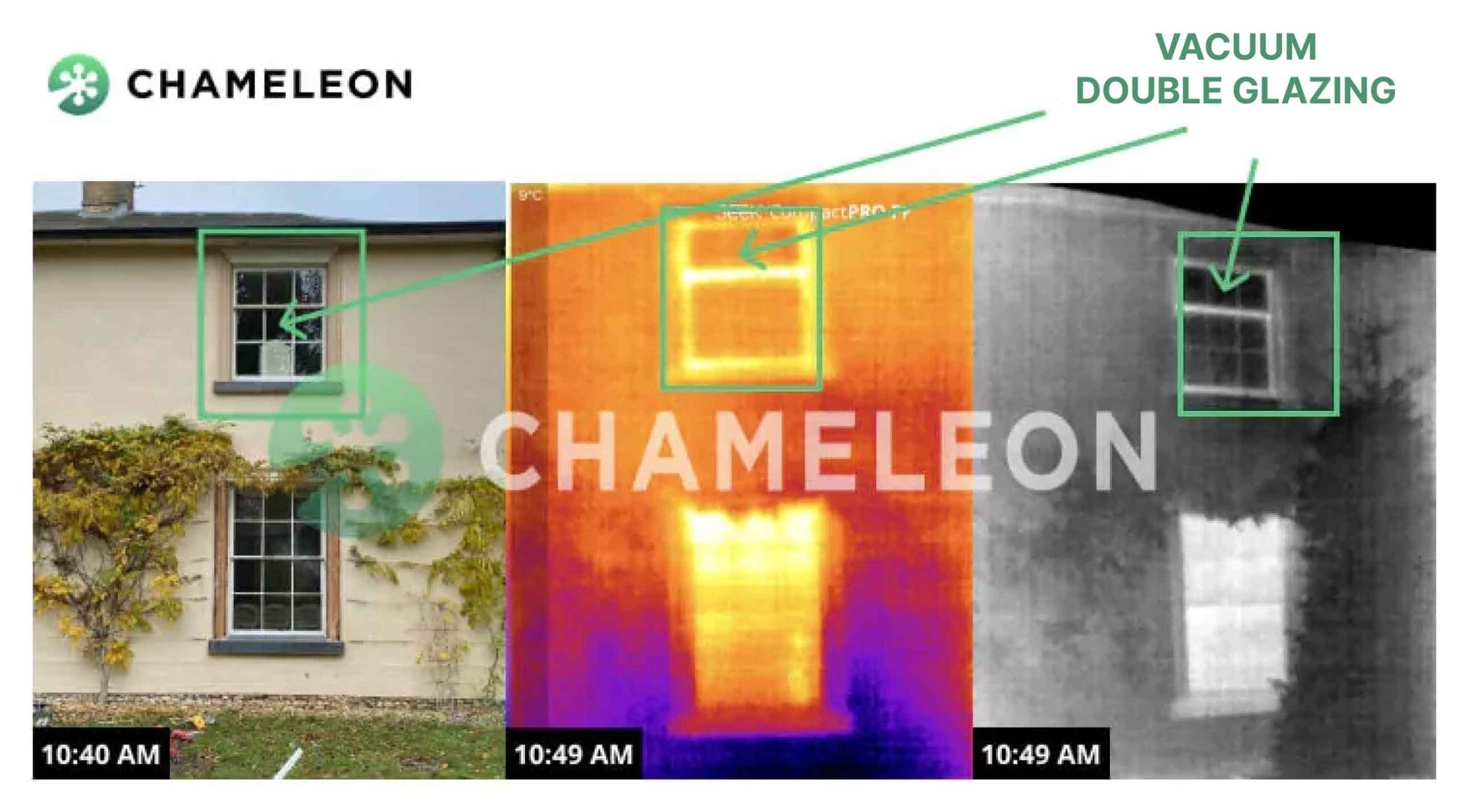
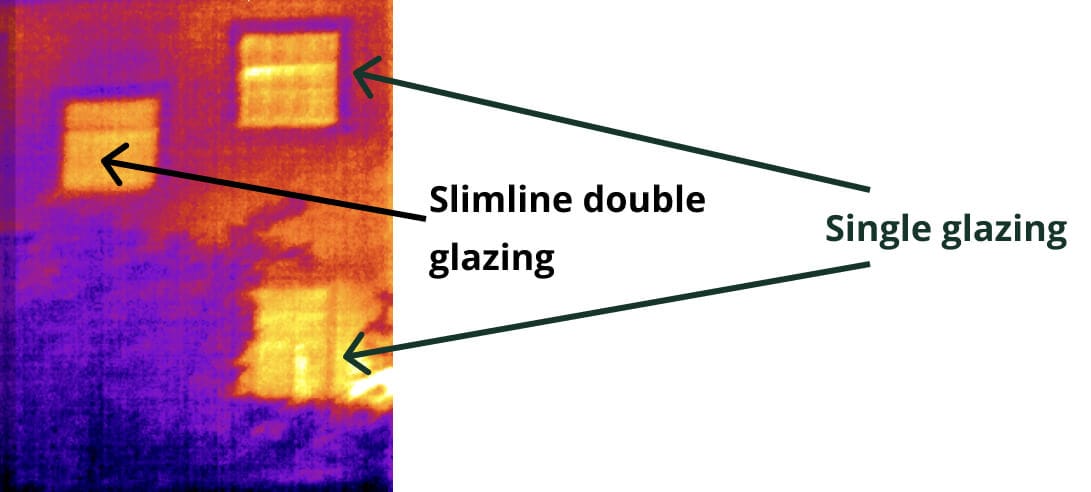
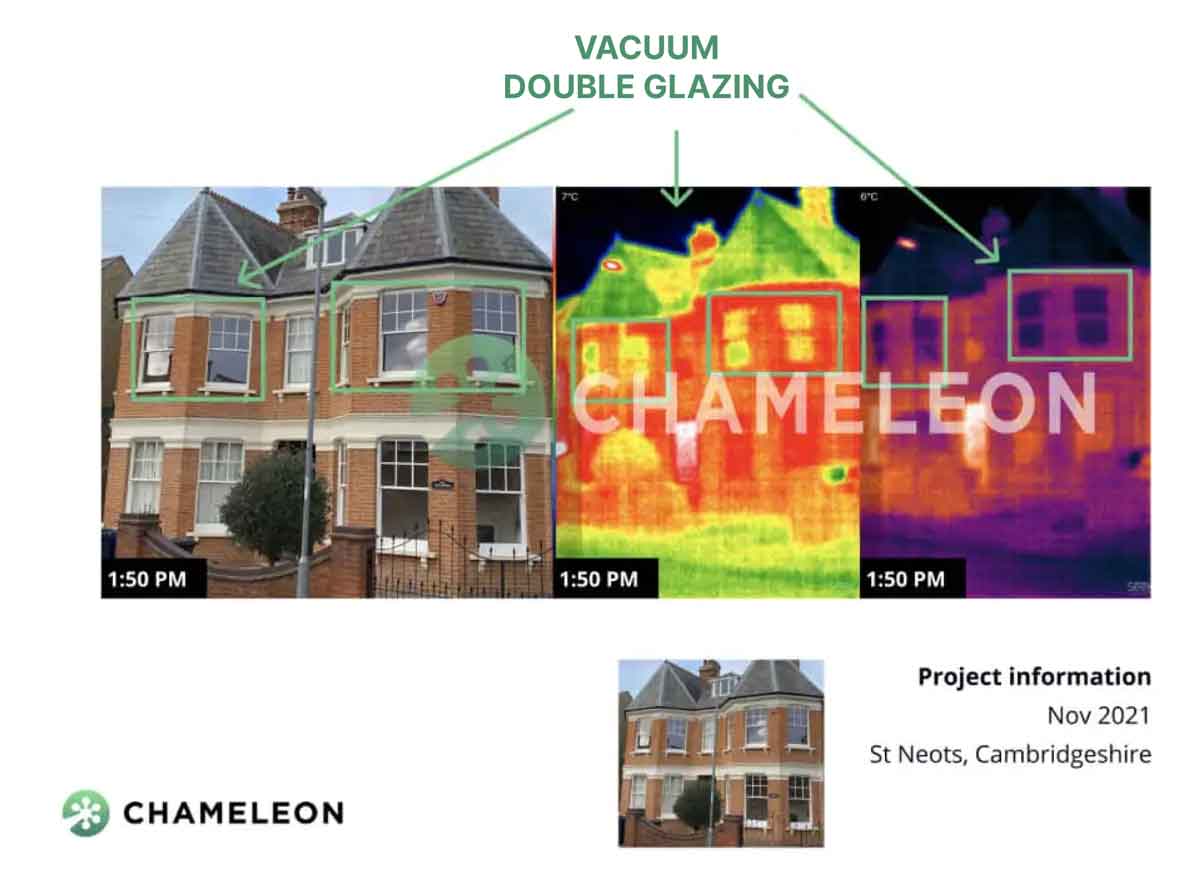
| Job | Glazing | What the camera showed |
|---|---|---|
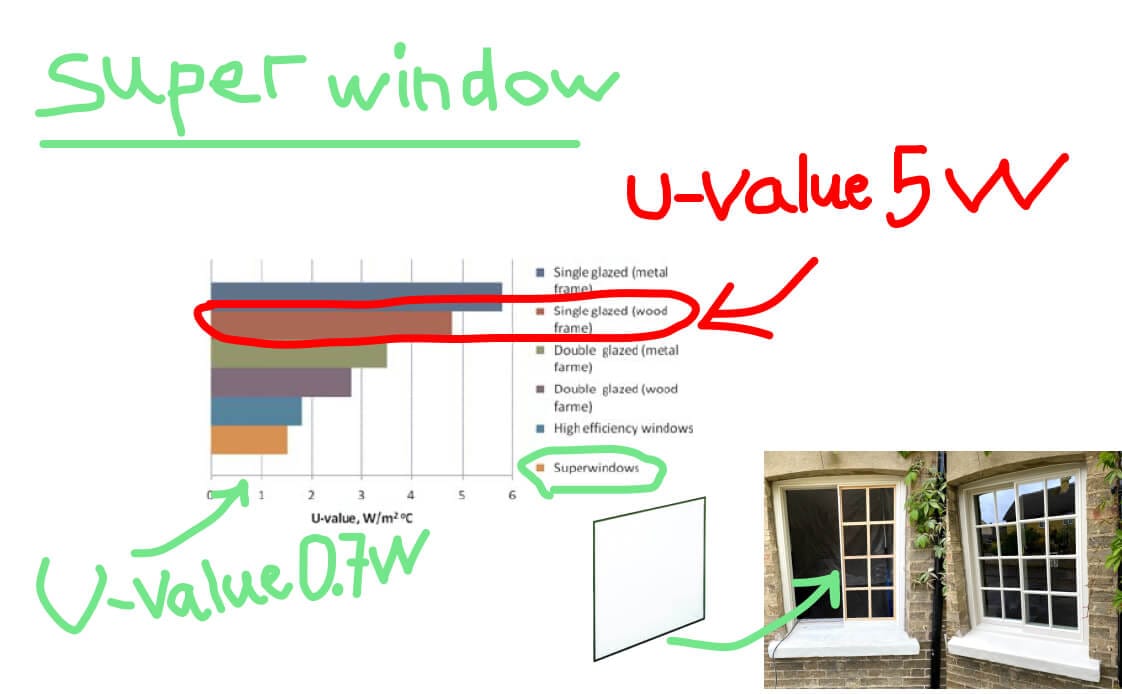
| Suffolk | Vacuum glass in the upper sashes, single glazing below | Almost no heat from the vacuum-glazed sash; the single-glazed sash below glowed, and lost more heat than a blind false window beside it |
| Suffolk, same house | A window fitted with slimline double glazing before our work | Little difference from the single glazing |
| St Neots, Cambridgeshire, November 2021 | Vacuum glass | Low heat from the windows we reglazed |
| Cambridge | Vacuum glass, with a single-glazed pane in the front door | The door glass glowed red; the windows showed far less heat |
| Godmanchester | Pilkington Spacia, another vacuum glass | Minimal heat from the renovated windows |
Frequently asked questions
What does W/m²K mean?
Watts per square metre per kelvin: the heat, in watts, that flows through one square metre of the window for every degree of difference between the inside and outside temperature. A kelvin is the same size as a degree Celsius.
How do you calculate the U-value of a window?
For the whole window, combine the glass, the frame and the glass edge by area: Uw = (Ag × Ug + Af × Uf + lg × ψg) ÷ (Ag + Af), as in EN ISO 10077-1. In practice the window maker or the glass maker gives the figures; you only need to check whether a quoted value is for the centre of the pane or the whole window.
Is 1.4 a good U-value for windows?
It is the minimum Building Regulations accept for a replacement window in England, so it is acceptable rather than outstanding. Passive House windows, usually triple glazed, reach 0.8 or less for the whole window.
What is the U-value of 20-year-old double glazing?
An EPC assumes 2.0 for double glazing fitted from 2002 and 2.7–3.1 for older units, depending on the gap between the panes. A modern replacement window is 1.4 or better, so units from the 1990s lose about twice as much heat.
What is the best U-value for double glazing?
For standard double glazing, about 1.0–1.1 at the centre of the pane with low-E glass and argon. Vacuum double glazing goes lower, 0.48–0.7, at about 8 mm thick, which is on a par with triple glazing.
Is 0.26 a good U-factor for windows?
That is an American figure in imperial units. Multiplied by 5.678 it is about 1.48 W/m²K, just above the 1.4 a replacement window needs in England.


