


Mould on windows is almost always caused by condensation. Warm, damp room air meets cold glass, the water runs down onto the sill, the seals and the frame, and black mould grows wherever it sits for days at a time.
To get rid of it, clean it off with a mould and mildew remover rather than bleach, then deal with the water: wipe the glass each morning, ventilate after cooking, showers and drying washing, keep the heating steady, and, if the windows are single glazed, make the glass itself warmer.
We restore and reglaze original timber windows, so we see what years of condensation do to sills, putty and bottom rails. This guide covers why mould grows where it does, whether it is dangerous, how to remove it safely and how to stop it for good.
| Question | Answer |
|---|---|
| What causes it? | Condensation on cold glass, plus poor ventilation; sometimes rain getting in through failed putty or sealant |
| Is it dangerous? | It can be, mostly for people with asthma, allergies, weak immune systems, children and older people |
| How do I remove it? | Mask, gloves and goggles; a mould and mildew remover, not bleach; dry the area afterwards |
| How do I stop it? | Less moisture, more air, steady heat, and glass that stays warm enough not to condense |
| When is it more than cleaning? | When the timber is soft, the paint swells or the mould covers a large area |
Why mould grows on windows
Air holds more water the warmer it is. When room air touches a surface colder than its dew point, the water comes out as condensation.
Room air at 20°C and 60% humidity condenses on anything below about 12°C. On a 0°C winter night the inside face of single glass sits at about 5°C, so the window is usually the coldest surface in the room and the first place water appears.
The water comes from everyday life: breathing, cooking, showers and kettles. Drying washing indoors alone adds 10–15 litres of water a week, according to Manchester City Council. The main causes of mould on windows are:
- Condensation. It forms overnight and in the mornings, runs down the glass and pools on the sill and the bottom of the frame. Every winter morning it is wet again, which is what mould needs.
- Poor ventilation. Damp air from kitchens, bathrooms and bedrooms stays in the room, so the humidity keeps rising. Bedrooms are often the worst: people breathe out moisture all night with the door shut.
- Leaks. Rain gets in through cracked putty, failed sealant or open joints in the frame, and the timber and plaster around the window stay damp from the outside.
- Too little heat. A cold room has colder walls and glass, so the same air condenses sooner. Short bursts of heat warm the air but not the surfaces.
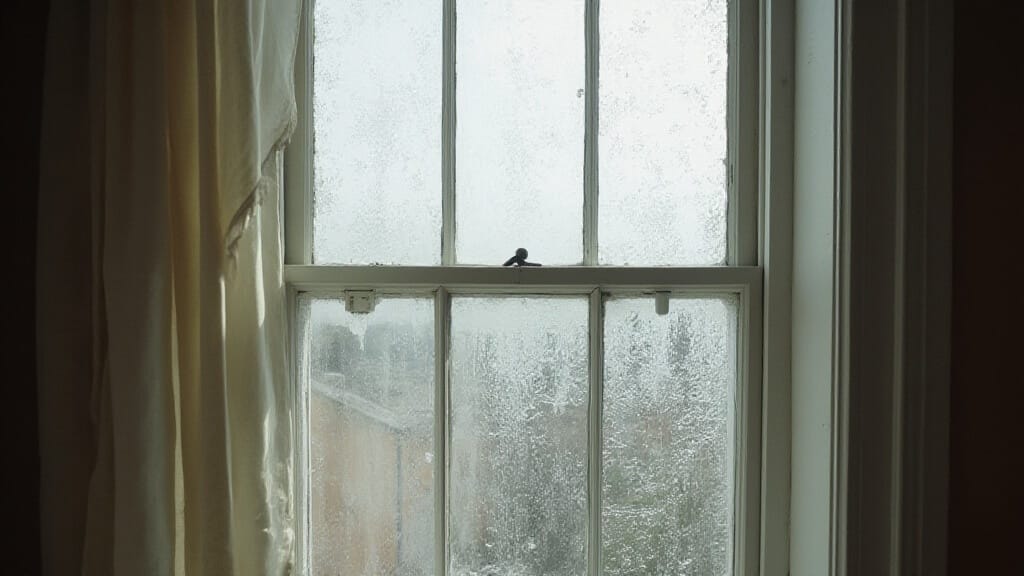
Glass itself does not feed mould. It grows on the thin film of dust and grease on the pane, on silicone and rubber seals, on paint and on timber, all of them places where the condensation sits.
- Single glass37%
- Older double glazing63%
- Modern double glazing84%
- Vacuum glass89–93%
Where mould grows: sills, seals, frames and glazing bars
Look in the places where water collects and air does not move:
- Window sills and the bottom corners. Condensation runs down and pools here. Dark spots in the corners and a musty smell are the first signs.
- Wooden frames and glazing bars. Timber soaks up water where the paint has cracked. Grey or black spots in the paint, or soft timber under it, mean the wood has been wet for a long time.
- Sealant and rubber seals. Mould grows into silicone and into the rubber gaskets of uPVC windows. Cracks and gaps in the sealant also let rain in.
- The reveals and the wall below the window. The plaster beside the frame is often colder than the rest of the wall, so mould spreads from the window onto it.
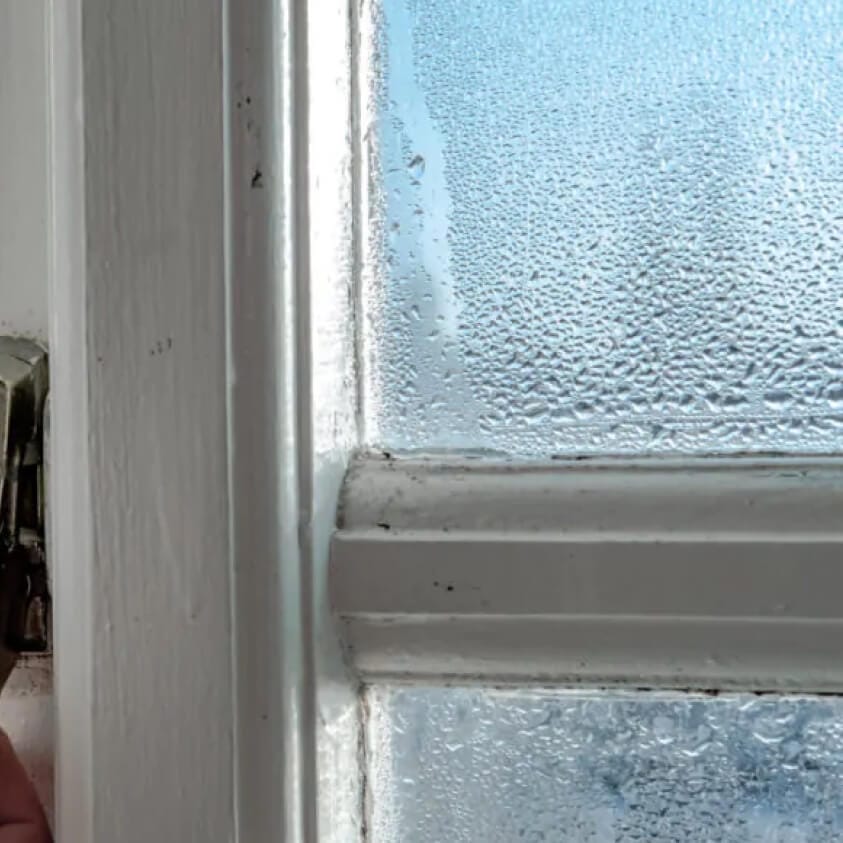
Brown spots on window frames
Not every spot is mould:
- Mould wipes off with a mould remover, at least at first, and comes back where it stays damp.
- Brown or yellow patches showing through white paint over knots in softwood are resin bleeding from the wood. They do not wipe off.
- Rust-coloured streaks under a fastener or hinge come from the metal.
- Brown water stains on a sill mean water has been getting into the timber.
Black mould on uPVC window seals
On uPVC windows mould usually lives in the silicone around the frame and in the rubber gaskets that hold the glass. Once it has grown into the silicone, cleaning only lightens the stain. Cut the old sealant out, clean and dry the joint, and reseal with a sanitary silicone that contains a fungicide.
Condensation between the panes
Water or mould inside a double-glazed unit, between the two panes, means its seal has failed. It cannot be cleaned out: the unit has to be replaced. More in window condensation: causes and how to reduce it.
Behind secondary glazing
Secondary glazing, a second window fitted inside the original, keeps the glass on the room side warmer. But it can move the condensation instead of stopping it. The original single pane, now cut off from the room’s heat, gets colder than before: about 2°C on a 0°C night, against 5°C without the secondary glazing.
Any damp room air that leaks past the secondary pane into the gap condenses on that cold glass, and the water runs down onto the original sash’s bottom rail and sill, behind glass where you cannot see it or wipe it. That is where mould and rot start.
The inner, secondary window should be the tighter of the two, so little room air reaches the gap, and the outer window should be able to breathe: Bath Preservation Trust advises leaving the outer windows without draught-proofing for exactly this reason. If water still collects, open the outer window to dry the gap, check the secondary glazing’s seals, and look for rain getting in round the original frame. Vacuum glass fitted in the sash itself leaves no gap: the glass the room air touches is the warm one.
Is black mould on windows dangerous?
It can be. Government guidance on damp and mould in the home links them to coughs, wheezing and shortness of breath, to airway infections, to new or worse asthma and allergies, and to eye irritation and skin rashes. Living with damp and mould also affects mental health.
The people most at risk are:
- children and young people, and older people
- people with asthma, allergies, COPD or other lung conditions
- people with weakened immune systems, for example during chemotherapy
- pregnant women and people who are housebound or bedbound
“Black mould” is a name for how it looks, not one species: several common moulds grow black on window sills. You do not need to know which one it is to deal with it.
A few spots on a sill are a cleaning job; mould over a large area, or coming back however often you clean it, is a sign of a damp problem that needs fixing. If someone in the house has symptoms that do not settle, talk to a GP.
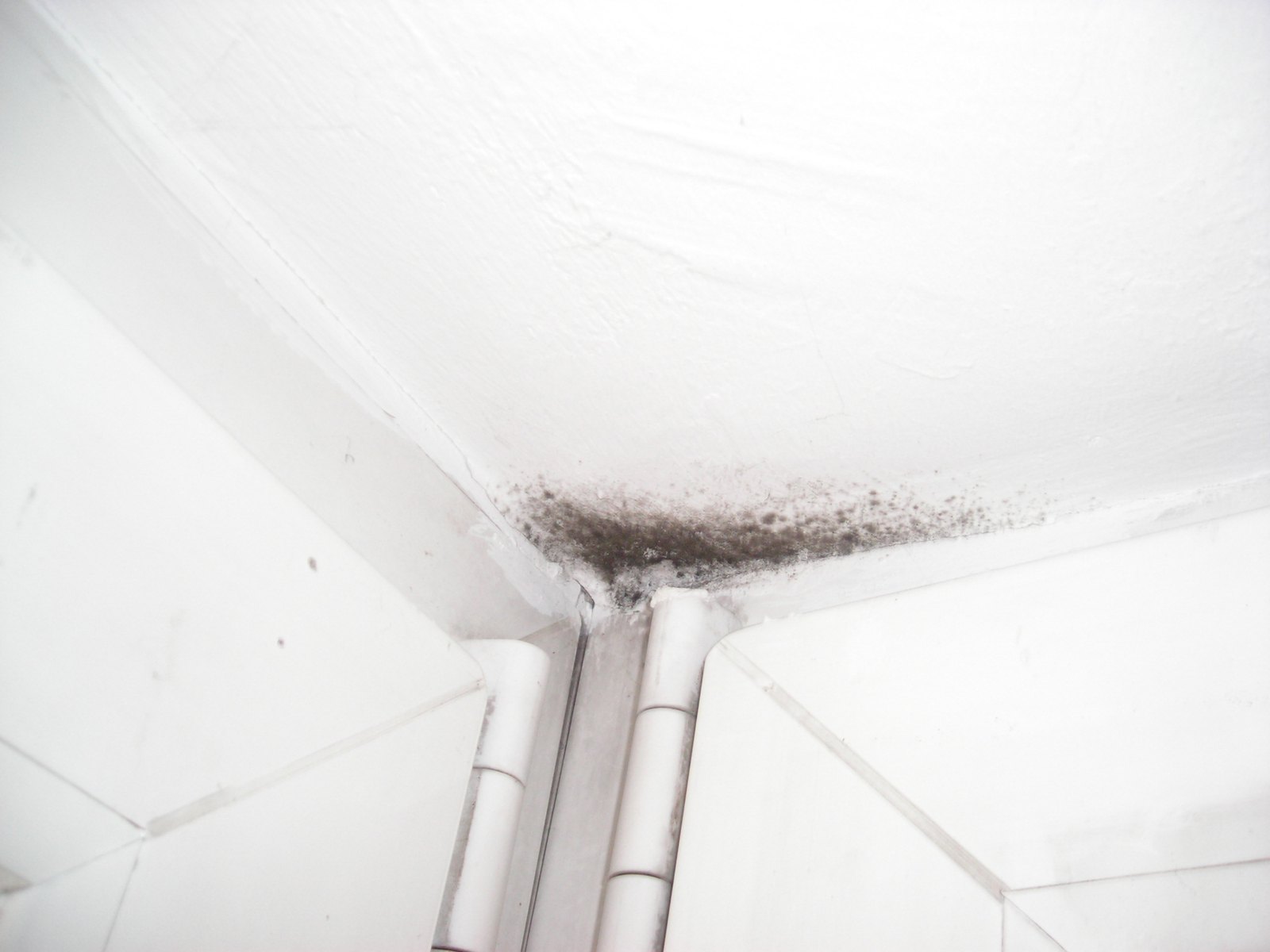
If you rent
Report mould to your landlord in writing, with photos. Since 27 October 2025, Awaab’s Law has required social landlords in England to investigate significant damp and mould within 10 working days, tell you what they found in writing within three working days of that, and make emergency hazards safe within 24 hours.
Private tenants whose landlord does not act can ask the council’s private housing team to inspect; damp and mould is one of the hazards it assesses.
How to remove black mould from windows safely
For mould on the glass, the sill and the frame, a small area you can deal with yourself:
- Protect yourself. Wear a mask, rubber gloves and goggles. Open the window and shut the door, so spores and fumes go outside rather than into the house.
- Wipe off the water first. Dry the glass and the sill with a cloth or a window vacuum so the cleaner is not diluted.
- Use a mould and mildew remover. Government guidance recommends these in preference to bleach. Bleach can whiten the stain without reaching mould that has grown into paint, sealant or wood. Follow the instructions and leave it for the time they give.
- Wipe, do not brush dry. Brushing or vacuuming dry mould lifts its spores into the air. Wipe with a damp cloth, rinse it often, and bag the cloths when you have finished.
- Dry everything. Leave the window open and the heating on until the sill and frame are dry; a dehumidifier speeds it up.
- Look at what was underneath. Check the sealant, the putty and the timber. If the paint is cracked or the wood is soft, the water has got in, and the mould will come back until that is repaired.
| Surface | What to do |
|---|---|
| Glass | Mould remover or warm soapy water, then dry; the glass itself is not damaged |
| Silicone and rubber seals | Mould remover; if the stain stays, cut out and reseal |
| Painted timber | Mould remover on a cloth, not soaking the wood; let it dry, then repaint any bare or cracked areas |
| Bare or soft timber | Cleaning will not fix it: the rotten wood has to be cut out and repaired |
| Plaster reveals | Mould remover, dry thoroughly, then a mould-resistant paint |
| Curtains and blinds | Wash on a hot cycle if the fabric allows; soft furnishings with heavy mould may need throwing away |
Large areas of mould, or mould in someone’s bedroom who has a lung condition, should be dealt with by professionals, as the government guidance says.
How to stop mould coming back on windows
Cleaning removes the mould; stopping it means taking away the water. In order of what usually makes the most difference:
1. Make less moisture
- Dry washing outside, in a tumble dryer vented outside, or in a closed room with the window open.
- Put lids on pans and use the cooker hood; run the bathroom fan during showers and for a while after.
- Wipe the condensation off the glass and sill every morning in winter, before it soaks in.
2. Let the damp air out
Open a window for a few minutes after cooking, showers and drying washing, and in bedrooms in the morning. A sash window is good at this: lower the top sash a few centimetres and warm damp air goes out at the top. Keep trickle vents open where you have them, and do not block air bricks.
Draught-proofing stops cold air leaking round the sashes, but a sealed room needs to be aired on purpose, so pair it with the habits above.
3. Keep the heat steady
A house heated a little all day stays warmer at the surfaces than one heated hard for an hour, so less condenses on the walls and windows. Do not leave rooms completely unheated in winter, and keep furniture a few centimetres off cold outside walls.
4. Take water out of the air
A dehumidifier helps in a room where washing has to dry or the condensation is heavy. A cheap hygrometer shows whether it is working: the table below shows how little humidity it takes to wet a single-glazed window.
5. Fix leaks and seals
Replace cracked sealant and missing putty, and repair open joints in the frame. If rain is getting in, no amount of ventilation will dry the timber.
6. Make the glass warmer
This is the one change that stops the water forming in the first place, as long as the warm glass is the one the room air touches: secondary glazing can trap the condensation behind it instead. The next section explains why.
Why warmer glass stops the condensation
The colder the glass, the less humidity it takes to wet it. With the room at 20°C, this is how warm the inside of each kind of glass stays, and how damp the room air must be before water forms on it:
| Glazing (U-value at the centre of the pane) | Glass at 0°C outside | Condenses above | Glass at −5°C outside | Condenses above |
|---|---|---|---|---|
| Single glass (5.8) | 4.9°C | 37% humidity | 1.1°C | 28% humidity |
| Older double glazing (about 2.8) | 12.7°C | 63% | 10.9°C | 56% |
| Secondary glazing: the room-side pane (about 2.9) | 12.6°C | 62% | 10.7°C | 55% |
| Secondary glazing: the original pane in the gap | About 2°C | 31% | About −2°C: frost | 22% |
| Modern double glazing (1.1) | 17.1°C | 84% | 16.4°C | 80% |
| Vacuum glass (0.48–0.7) | 18.2–18.8°C | 89–93% | 17.7–18.4°C | 87–91% |
Single glass on a frosty night runs with water whenever the room is above 28% humidity, so in a lived-in room it nearly always does. Secondary glazing keeps its own pane drier, but the original pane behind it is colder still, so damp air that reaches the gap condenses there. Vacuum glass stays dry until the air is close to saturated. These are centre-of-pane figures from the standard calculation; the edges of the glass and the frame stay a little colder, so ventilation still matters.
Standard double glazing is 24–28 mm thick and does not fit an original sash. Vacuum glass is about 8 mm, so we fit it into the sashes you already have: we reglaze sashes as thin as 35 mm, most wooden sashes are around 40 mm, and we keep about 90% of the original glazing bars. The figures behind the table are in our guide to U-values for windows.
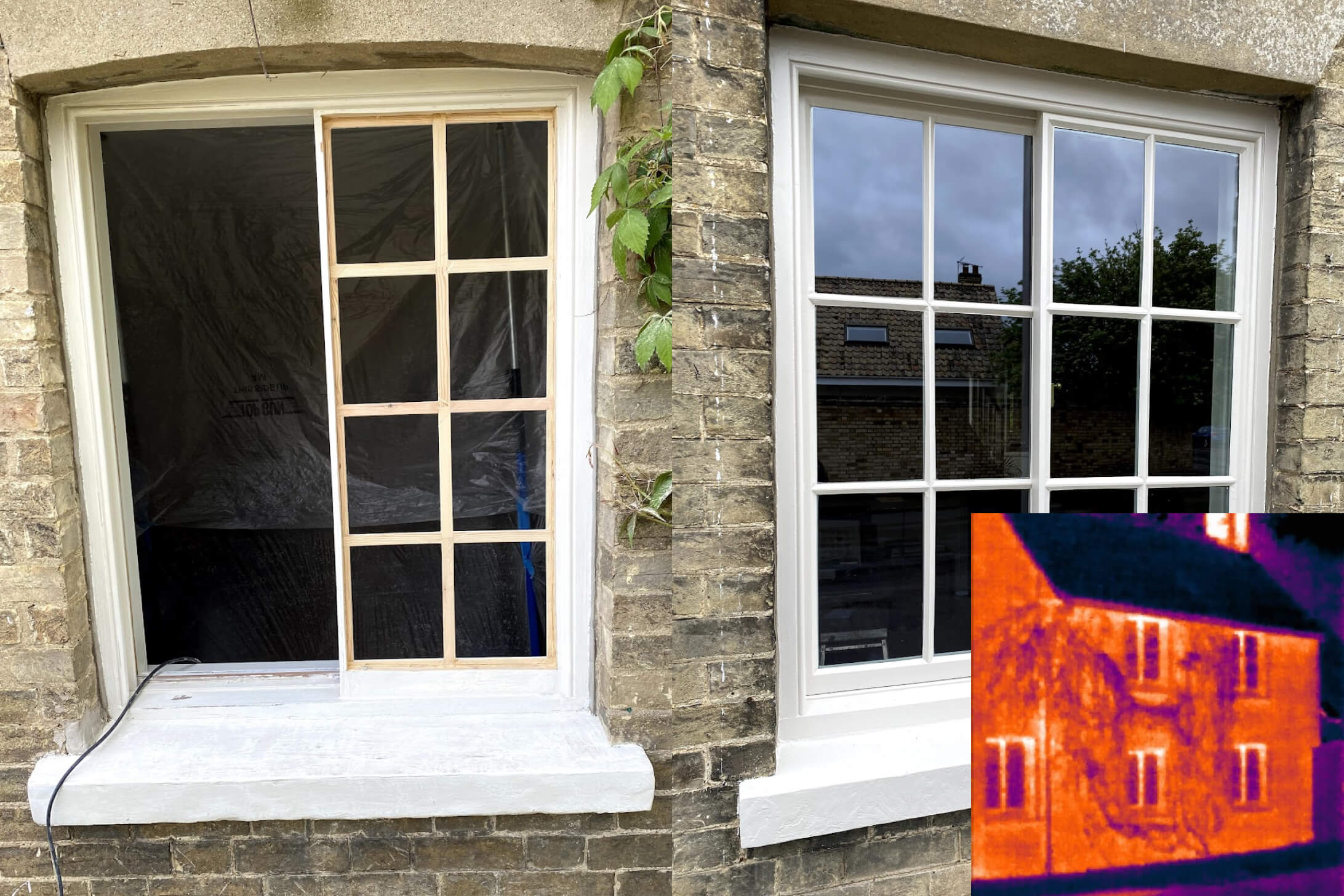
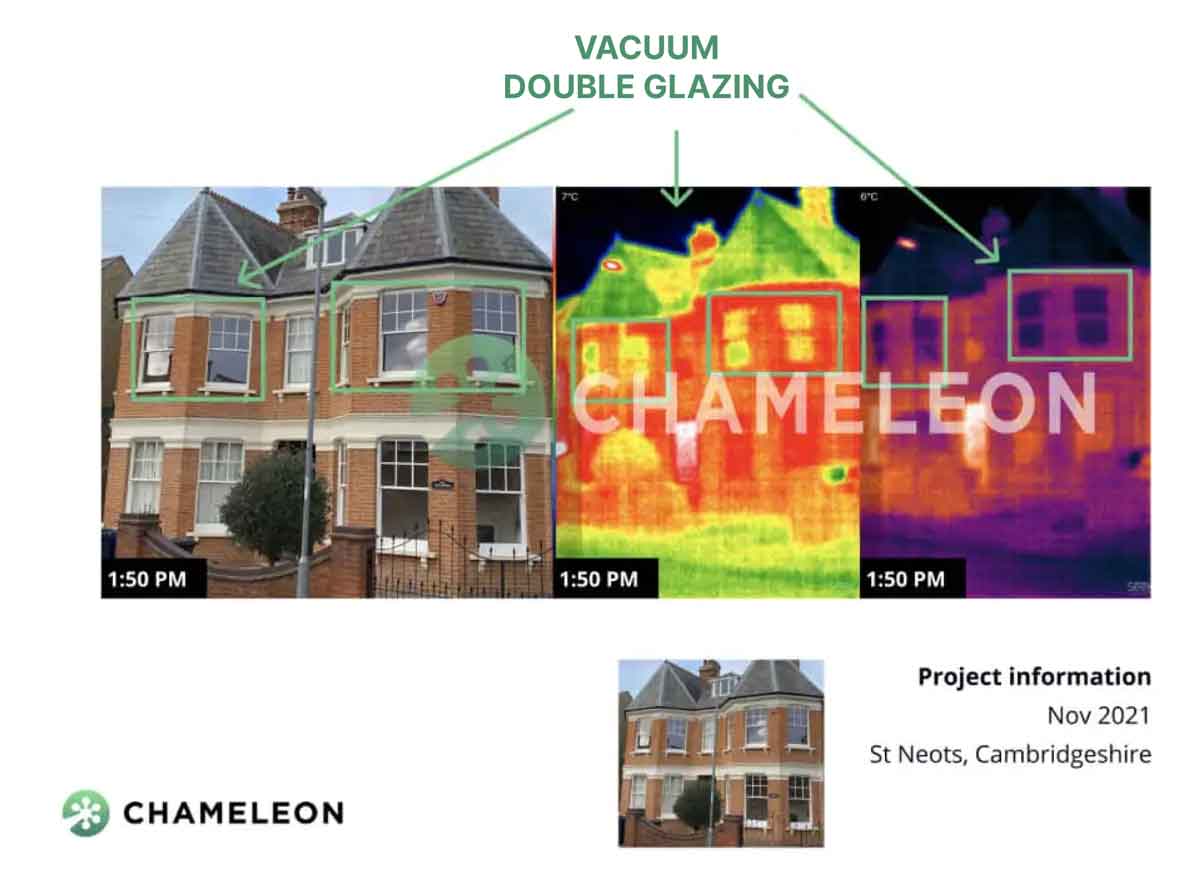
| Job | Glazing | What the camera showed |
|---|---|---|
| Suffolk | Vacuum glass in the upper sashes, single glazing below | Almost no heat from the vacuum-glazed sash; the single-glazed sash below glowed |
| St Neots, Cambridgeshire, November 2021 | Vacuum glass | Low heat from the windows we reglazed |
| Cambridge | Vacuum glass, with a single-glazed pane in the front door | The door glass glowed; the windows showed far less heat |
| Godmanchester | Pilkington Spacia, another vacuum glass | Minimal heat from the renovated windows |
The sash is restored first, because it has to carry the new glass, and draught-proofing goes in at the same time. With the restoration it starts at £1,050 a window, usually £1,050–£1,550, with a 15–25-year guarantee on the glazing; the glass takes 8–16 weeks from order, and our minimum is five windows. More on sash window double glazing.
When mould means the window needs repair
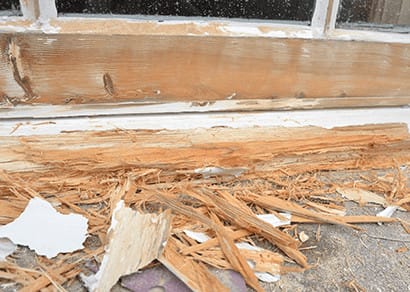
Years of condensation do more than grow mould. The water soaks into the bottom rail of the sash, the glazing bars and the sill, the paint lifts, the putty falls out, and the timber starts to rot. Then the mould is a symptom, and cleaning will not stop it. Signs the window needs more than cleaning:
- soft or crumbling timber when you press it with a screwdriver, especially in the bottom corners
- paint that swells, flakes or bubbles on the sill and bottom rail
- missing or cracked putty around the panes
- water coming in through the frame even after resealing
- sashes that have warped, stick or rattle
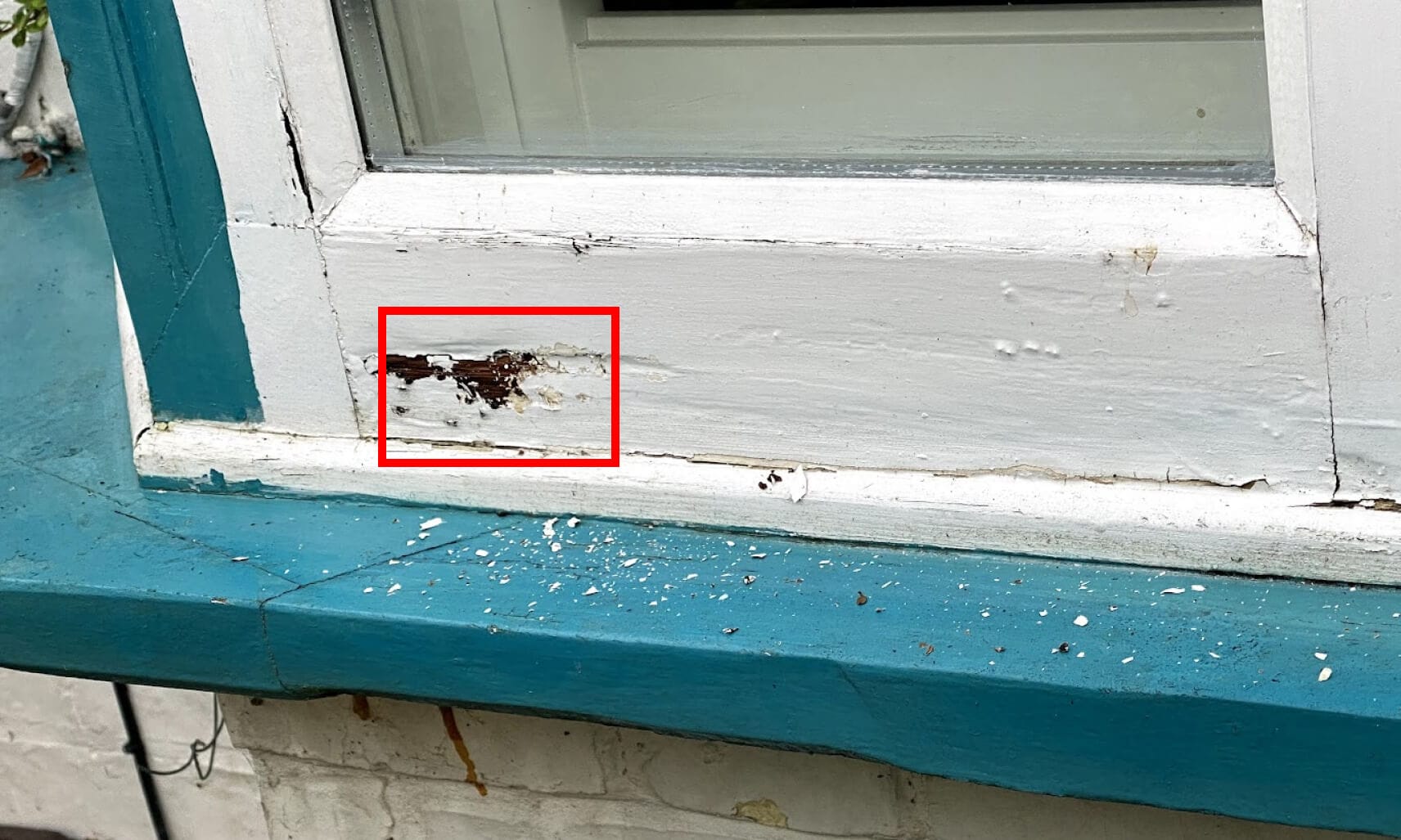
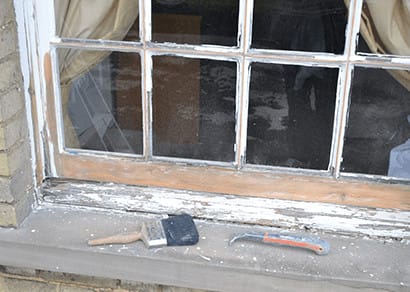
Where condensation and rain sit: rot starts under paint that still looks whole, and in a bottom rail that has lost its putty.
Rot like this rarely means a new window. We cut out the rotten timber, splice in new wood, and laminate the parts where water sits, the bottom rail, meeting rail and sill, in Tricoya, which its maker guarantees for 50 years against rot.
Every timber repair carries our 20-year guarantee. Restoration starts at £650 a window, usually £770–£910, and any sash we take out goes back the same day.
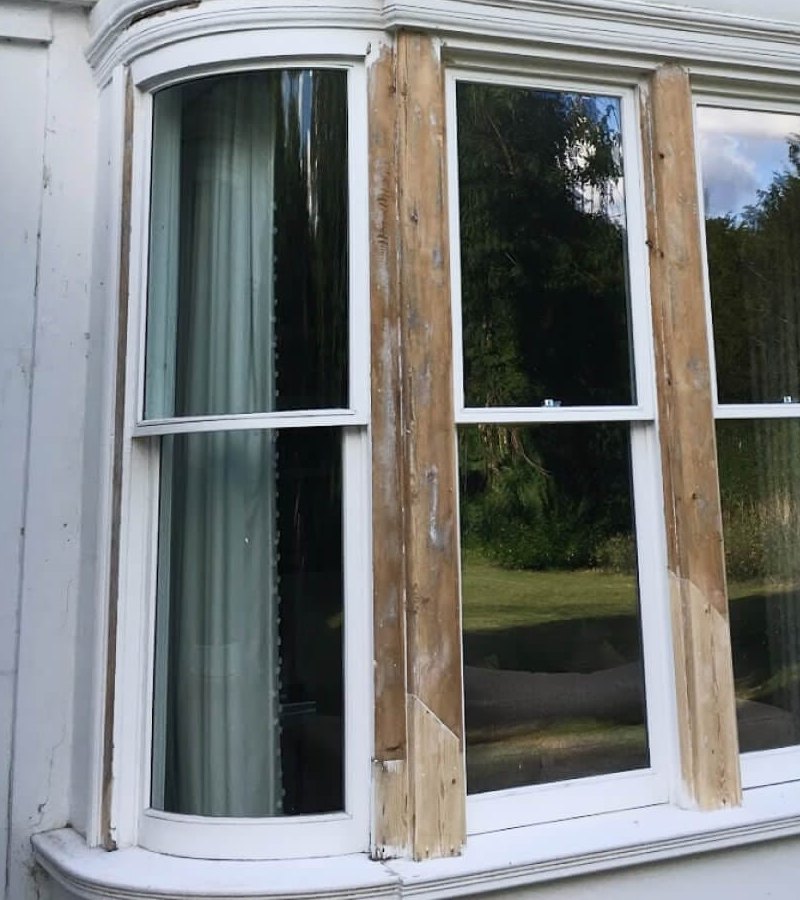
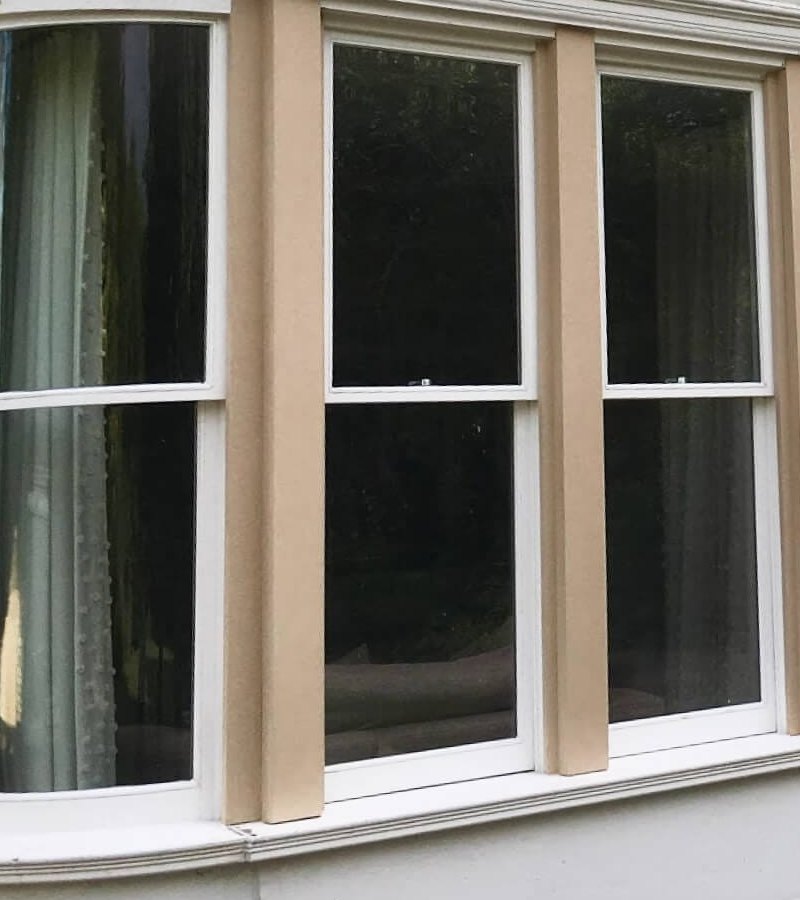
The same curved sash bay on one of our jobs: the rotten timber cut out and new wood spliced in, then the parts where water sits laminated in Tricoya, before painting.
One of our jobs: a Victorian house near Baldock
In May and June 2021 we restored the sash windows of a Victorian house near Baldock, Hertfordshire: six-over-six and two-over-two sashes and a bay. We took the sashes out and stripped them, cut out the rotten timber, fitted corner brackets to the weak joints, laminated the bottom rails in Tricoya, put in new glass and finished everything in cream.
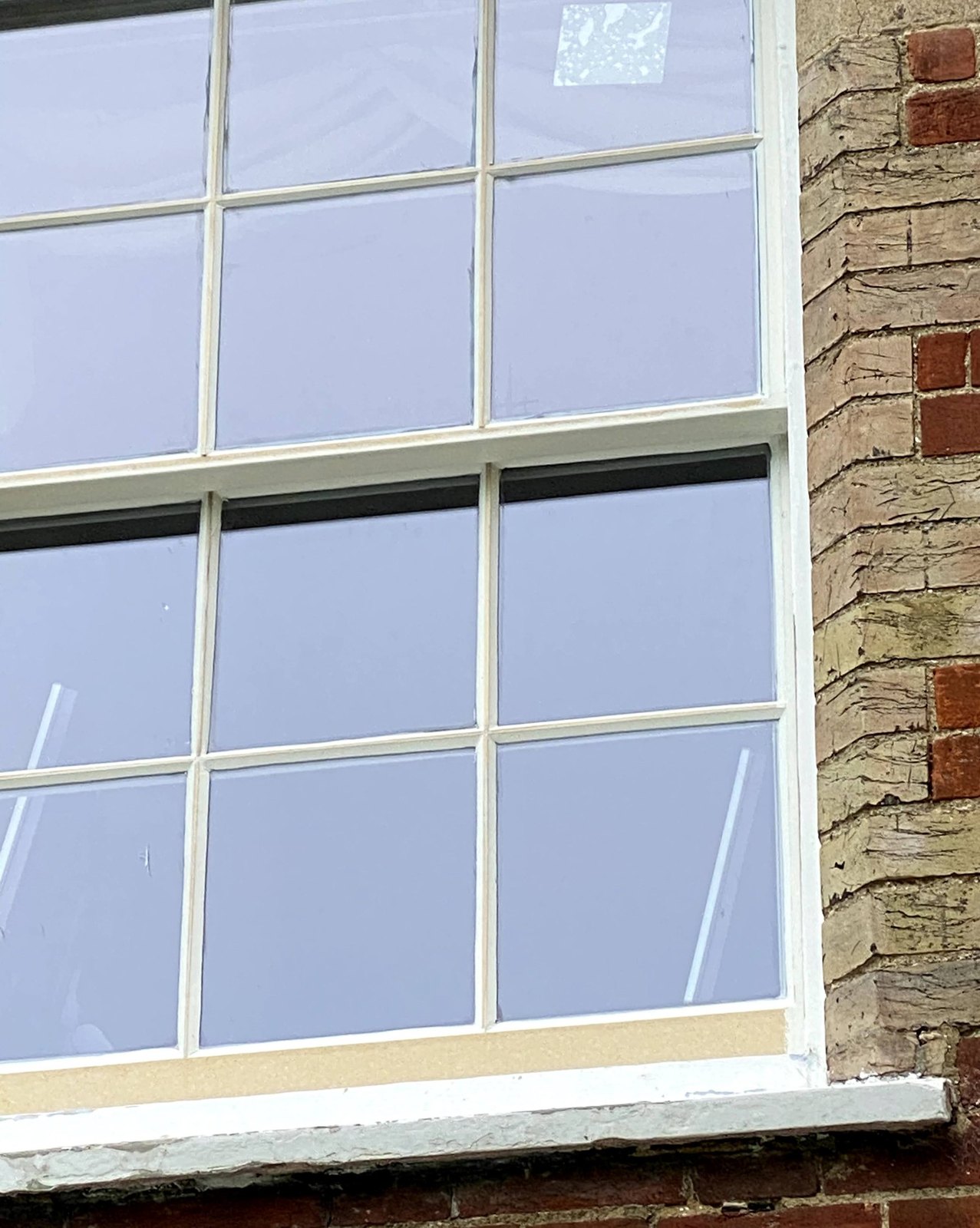
From our jobs
On the windows we restore, the weak spots are the bottom rail, the meeting rail and the sill: the parts where water runs down the glass and sits. A house of 15 windows takes us 5–7 days on site.
More on sash window repair and rotten wooden window frames. Replacing the window is the last resort, for frames where most of the timber has gone.
Frequently asked questions
Is black mould on windows harmful?
It can be. Damp and mould are linked to coughs, wheezing, asthma, allergies, airway infections, eye irritation and skin rashes. Children, older people and anyone with a lung condition or a weakened immune system are most at risk. Clean small patches promptly and deal with the condensation behind them.
What is the best way to stop black mould coming back on windows?
Take away the water it lives on. Wipe the condensation off each morning, ventilate after cooking, showers and drying washing, keep the heating steady, and fix leaking sealant or putty. On single-glazed windows, warmer glass such as vacuum glazing stops most of the condensation forming at all.
What kills black mould on window sills?
A mould and mildew remover, which government guidance recommends in preference to bleach. Wear a mask, gloves and goggles, leave it for the time on the label, wipe with a damp cloth and dry the sill. If the mould has grown into soft or bare timber, the wood needs repairing.
Does not having the heating on cause mould?
It makes it more likely. A cold room has colder walls and windows, so the same damp air condenses on them sooner. Low, steady heat keeps the surfaces warmer than short bursts of high heat, and an unheated room in winter is where condensation and mould are usually worst.
Should I open windows in winter to prevent mould?
Yes, briefly. Open a window for a few minutes after showers, cooking and drying washing, and in the bedroom in the morning. With a sash window, lowering the top sash a few centimetres lets warm damp air out at the top while losing less heat than opening it wide.
Why do my windows have condensation every morning?
Overnight the glass is at its coldest and the bedroom air at its dampest, from breathing with the door shut. Single glass at 0°C outside sits at about 5°C inside and condenses whenever the room is above about 37% humidity. Airing the room and warmer glass both reduce it.
Will double glazing stop mould on windows?
It stops most of the condensation on the glass, which is what feeds the mould. Modern double glazing stays at about 17°C inside on a 0°C night and vacuum glass at about 18°C, against 5°C for single glass. Mould can still grow on cold walls and in damp rooms, so ventilation still matters.
Does secondary glazing cause condensation?
It can, between the two windows. The original pane behind secondary glazing is cut off from the room’s heat and sits at about 2°C on a 0°C night, so damp room air that leaks into the gap condenses on it, and the water can grow mould and rot the sash out of sight. Keep the secondary glazing well sealed and let the outer window breathe.

