


Sash window locks are the fasteners, screws and stops that hold the two sashes of a sliding sash window shut, or stop them opening too far. The usual ones are a fastener on the meeting rails (a Fitch, quadrant, Brighton or claw fastener), dual screws through both sashes, sash stops in the frame and restrictors.
A fastener on its own keeps a sash closed and quiet; for security, add a lock that needs a key, two dual screws or a pair of sash stops, to every window someone could reach from the ground or a flat roof.
We have restored the sash windows of more than 1,000 homes since 2008, and the fasteners, lifts and stops come off or are masked before the sashes are stripped and painted. This guide shows the locks we find on period windows, how secure each one is, what it costs and how to fit it.
Types of sash window locks
Here they are side by side; each one is explained below with photos.
| Lock | Where it goes | How it works | Key? | Security |
|---|---|---|---|---|
| Fitch fastener | Meeting rails | A curved cam on the lower sash turns into a keeper on the upper sash and pulls the rails together | Locking versions | Keeps the sash shut; can be slipped from outside unless it locks |
| Quadrant and straight-arm fasteners | Meeting rails | An arm on the lower sash swings across into a keeper on the upper | Locking versions | As a Fitch |
| Brighton fastener | Meeting rails | A screw on a pillar swings into a slotted keeper and is screwed down tight | Locking versions | Harder to slip than a cam, as it is screwed down |
| Claw fastener | Meeting rails | A cam turns a curved claw into a receiver | Some | As a Fitch |
| Dual screw | Through both meeting rails | A steel screw runs from the inner sash into the outer one, turned with a splined key | Yes | Good: hidden from outside, and the sashes cannot slide |
| Sash stop | Side of the frame | A bolt stops the sash rising past it; a second one higher up lets it open a little | Yes | Good, and it allows a safe gap for air |
| Restrictor | Side of the frame | Lets the sash open only so far, released by an adult | Usually | Mainly for children; also limits a gap from outside |
Fitch fasteners
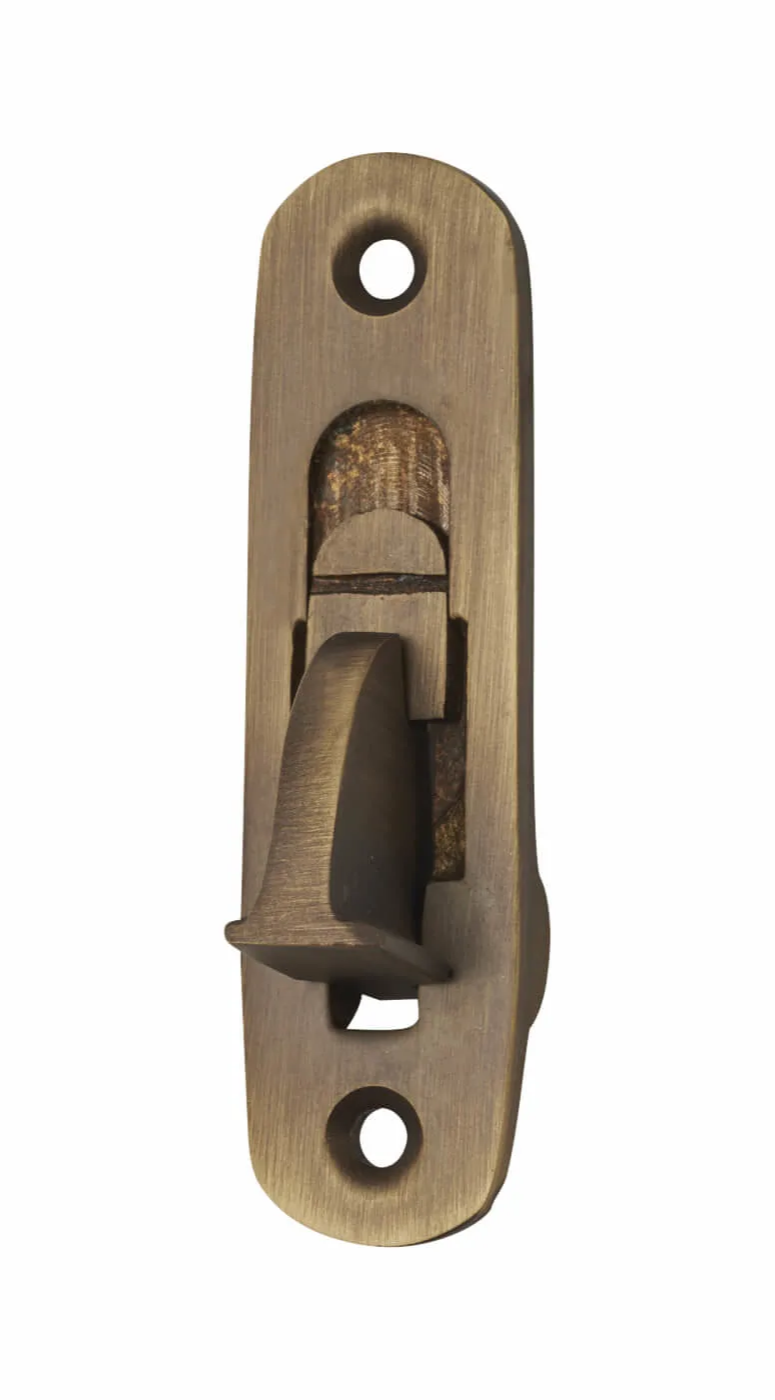
The Fitch is the traditional English sash fastener: a curved, semicircular cam on a pivot on the lower sash turns into a hooked keeper on the upper sash and draws the two meeting rails tightly together, which also stops them rattling. Locking Fitch fasteners have a small key, and narrow-back versions fit slim meeting rails.
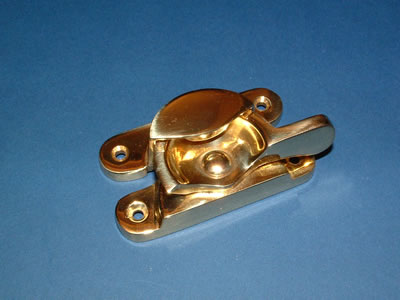
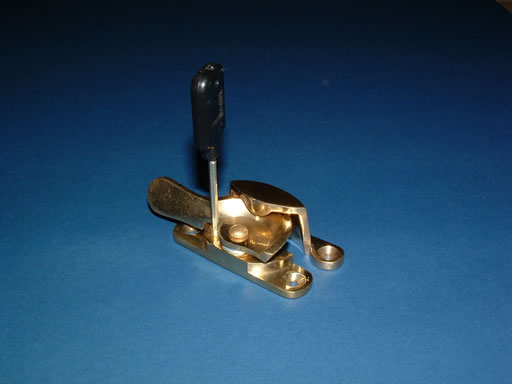
Left: a brass Fitch fastener. Right: a locking Fitch, with its key in the lock.
Quadrant and straight-arm fasteners
These have an arm that pivots on the lower sash and swings across into a keeper on the upper one. On a quadrant fastener the arm runs in a curved keeper; on a straight-arm fastener it hooks over a straight one. Both are simple, come in brass, chrome and painted finishes, and are made in locking versions.
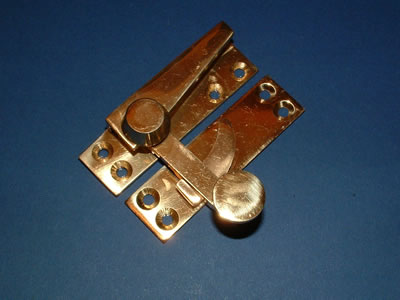
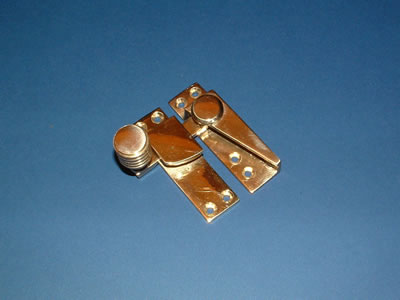
Left: a quadrant fastener. Right: a straight-arm fastener.
Brighton fasteners
A Brighton fastener is a screw on a hinged pillar. You swing it into a slotted keeper on the other sash and tighten the knob, so it clamps the rails rather than just hooking them, which makes it harder to work open from outside. They come in locking and non-locking versions.
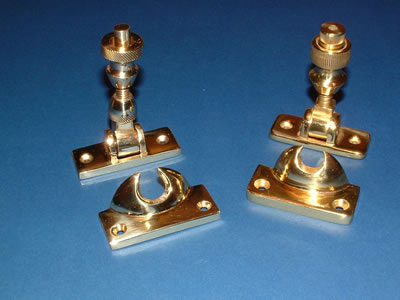
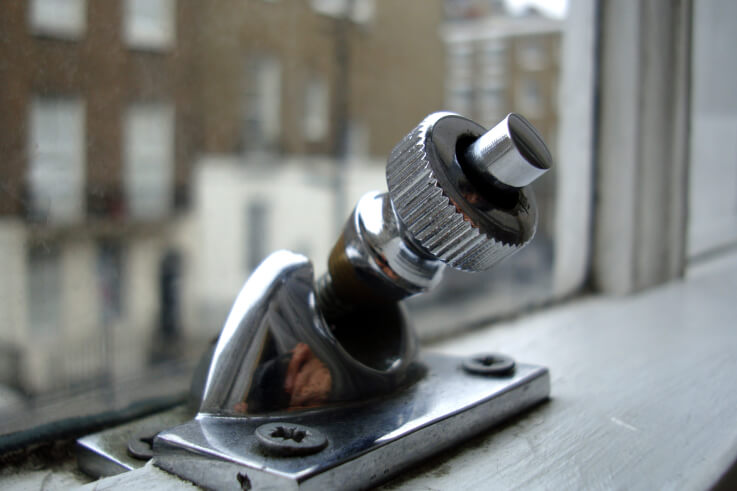
Brighton fasteners: the knob screws the pillar down into the slotted keeper.
Claw fasteners
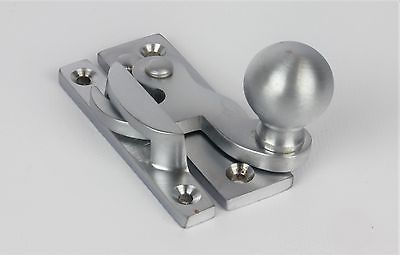
A claw fastener is another traditional Victorian fastener: turning the knob works a cam that swings a curved metal claw into a receiver on the other sash. More on the period in the history of the sash window.
Key-locking fasteners and dual screws
A key-locking fastener works like the others but locks shut with a key, so it cannot be opened by reaching through broken glass or slipping a blade between the rails.
A dual screw is the strongest of the simple locks. You drill through the inner sash’s meeting rail into the outer one, fit the two metal barrels supplied, and a steel screw, turned with a splined key, locks the sashes together so neither can slide. Nothing shows from outside. Fit one near each end of a wide window, and keep the key near the window, not in it.

Sash stops
A sash stop is a bolt in the side of the frame that stops the sash moving past it. It comes in two parts: a receiver screwed into the frame and a steel barrel or bolt that you screw in, or press in with a key, when you want it locked. Fit a pair just above the closed lower sash to lock it, and if you like to sleep with the window open, a second pair higher up so the sash opens a little but not enough to climb through.
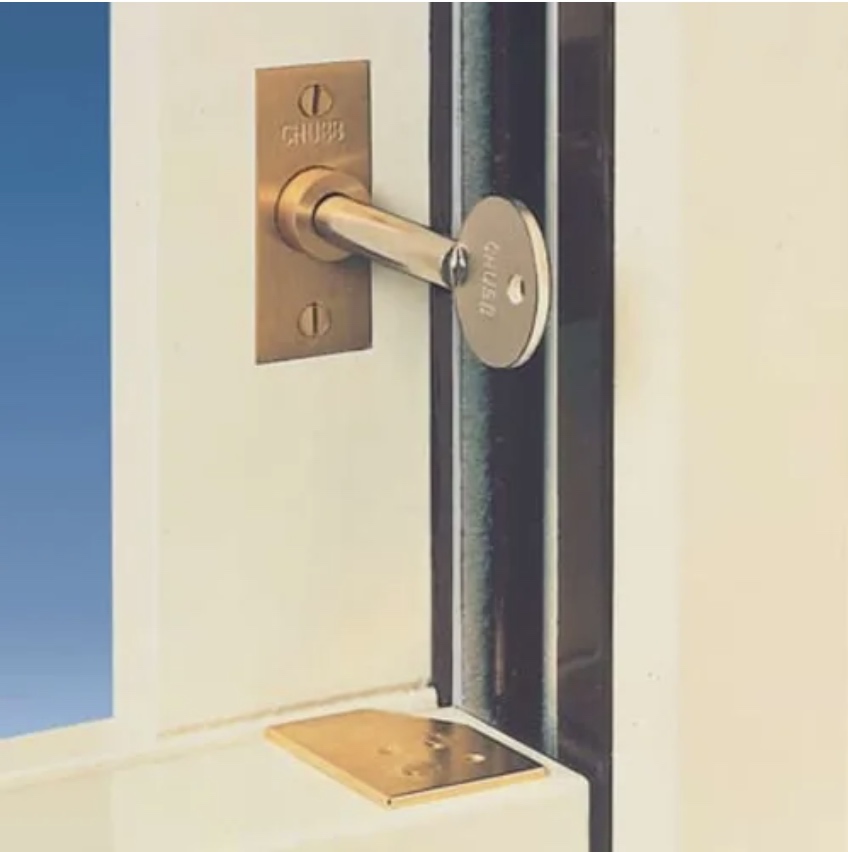
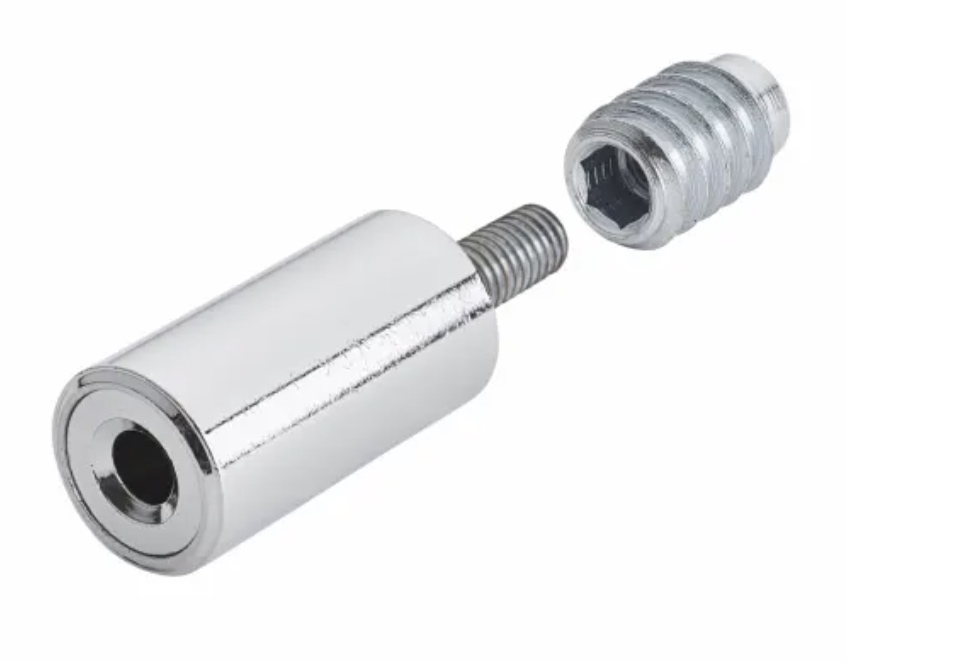
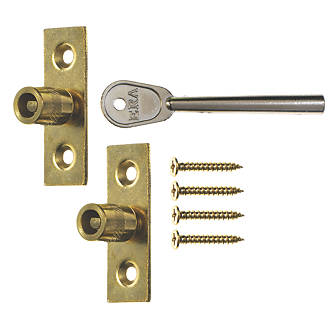
Sash stops: the receiver goes into the frame, the barrel or bolt locks into it.
Sash window restrictors
A restrictor lets the sash open only so far: some are barrels like sash stops, others a spring-loaded tongue that can be locked open or shut with a key. They are mainly for children. The Health and Safety Executive advises limiting openings to 100 mm or less; restrictors sold as child-safety products are tested to stop the gap at under 89 mm; and RoSPA recommends them on every window at or above the first floor, fitted so an adult can release them quickly in a fire.
Which locks does a sash window need?
Lock for the window you have, not for the house as a whole:
- Every sash window: a fastener on the meeting rails. It holds the sash shut, pulls the rails together and stops the rattle.
- Windows someone can reach (ground floor, basement, or within 2 m of a flat roof or balcony): add something that needs a key: two dual screws, a pair of sash stops or a key-locking fastener.
- Upper floors with children in the house: restrictors that hold the gap under 100 mm.
- Windows you would escape through in a fire: keep the key by the window, and choose stops or restrictors an adult can release quickly.
- Insurance: read your policy. Many ask for key-operated locks on downstairs and other easily reached windows, and a claim can turn on it.
Locks for Victorian and Georgian sash windows
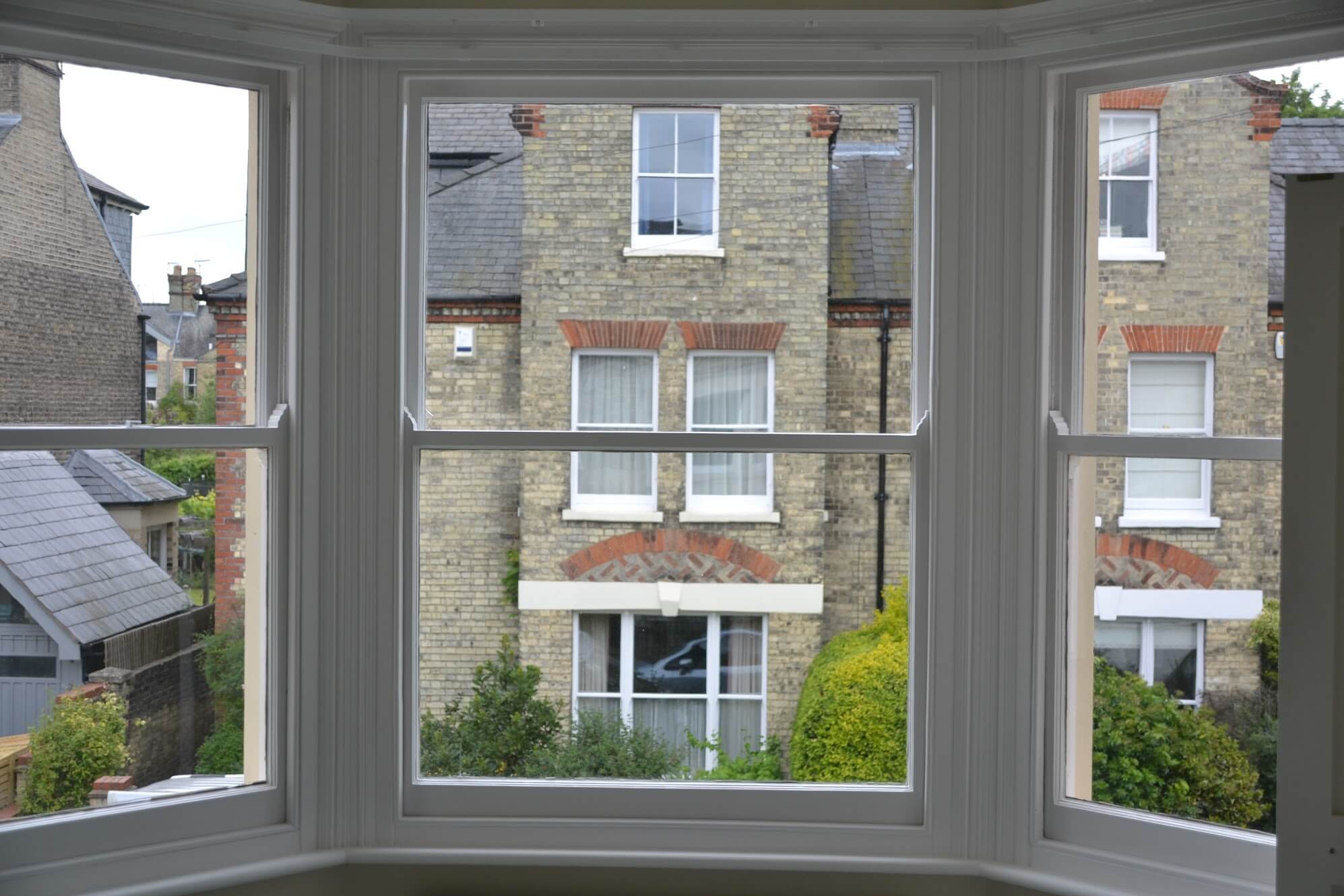
On a period window the fastener is part of the look, so keep the original where it still works. Old brass fasteners are often buried under paint: taken off, stripped and polished, they usually close as well as they did, and they fit the screw holes already in the rails. If one is broken, match the type and the finish rather than the brand: a Fitch or a Brighton in brass suits most Victorian windows.
Georgian sashes often have slim meeting rails, and a standard fastener can overhang them; narrow-back fasteners are made for that. Keep the security out of sight: dual screws and sash stops are hidden in the rails and frame, so a listed or conservation-area front looks unchanged. How the cords and weights work is explained in types of sash windows.
How secure are sash windows?
Doors are the usual way in: in the Crime Survey for England and Wales, about three burglaries in four where the burglar got in went through a door, and about one in five through a window. Most burglars look for an easy target, and a window that is visibly locked is not one.
An old sash with only a worn fastener is easy to open: a knife or screwdriver slid between the meeting rails can push a cam fastener round, and a loose fastener on soft, rotten timber can be knocked off. A sound traditional sash window with a fastener and a key-operated lock, two dual screws or a pair of sash stops, cannot be slid open from outside.
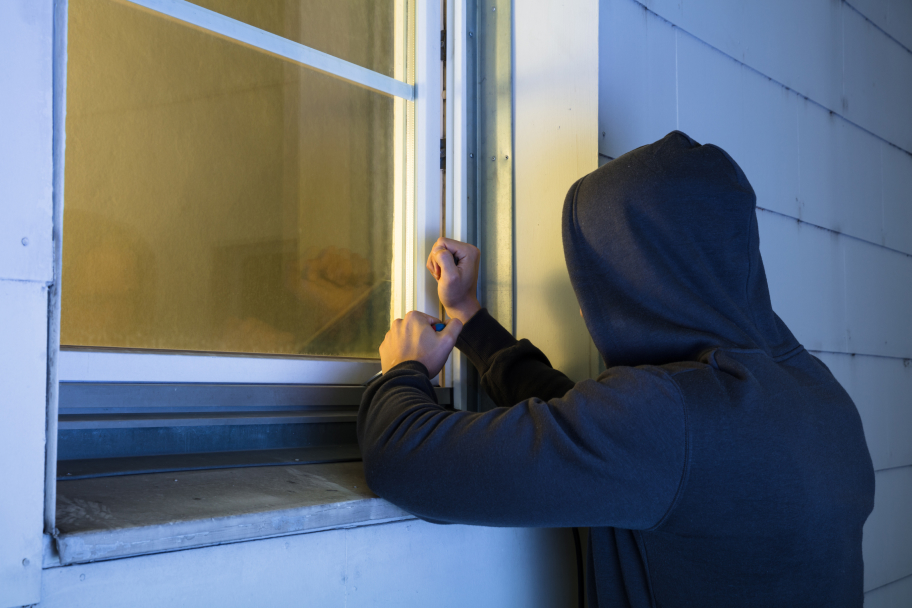
A lock is only as strong as the sash
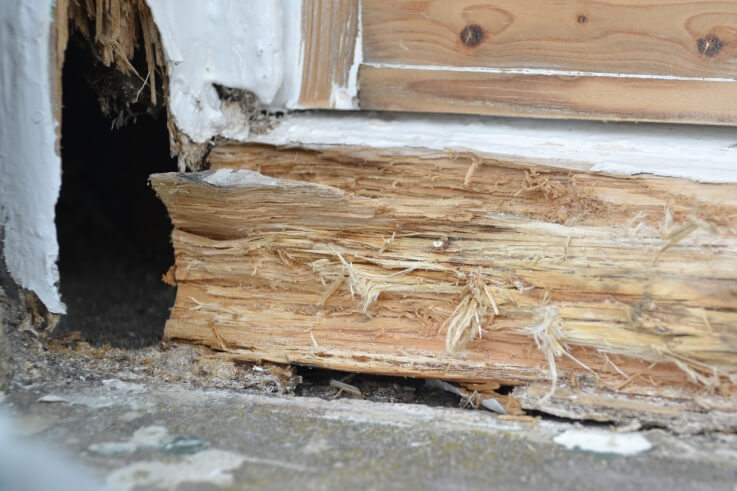
A fastener is held by four small screws in the meeting rails. If the timber round them is rotten, or the sashes are so loose that the rails do not meet, no lock will hold properly. Before buying new locks, check that the sashes slide, meet squarely and are sound where the screws go. Timber windows need regular maintenance to stay that way.
In our restorations the rot is cut out and new Accoya spliced in, the weak spots are laminated in Tricoya, stuck sashes are freed, and new cords, weights and draught-proofing seals go in, so the rails meet again and the fastener can do its job. It starts at £650 a window, usually £770–£910, with a 20-year guarantee on the timber repairs. If a sash still rattles with the fastener shut, the beads are worn: draught-proofing fixes that.
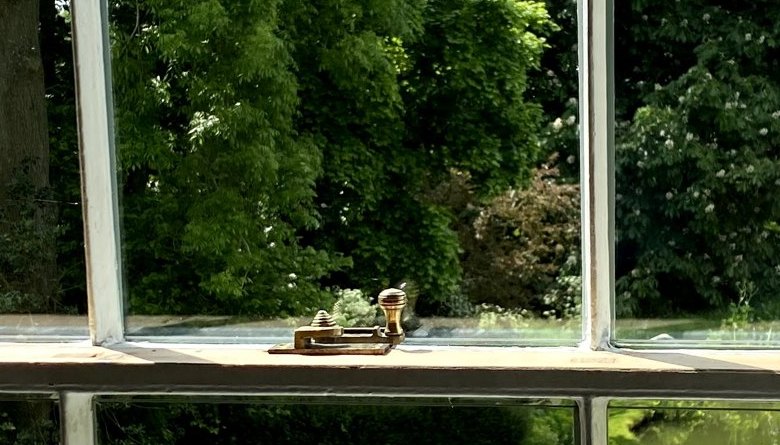
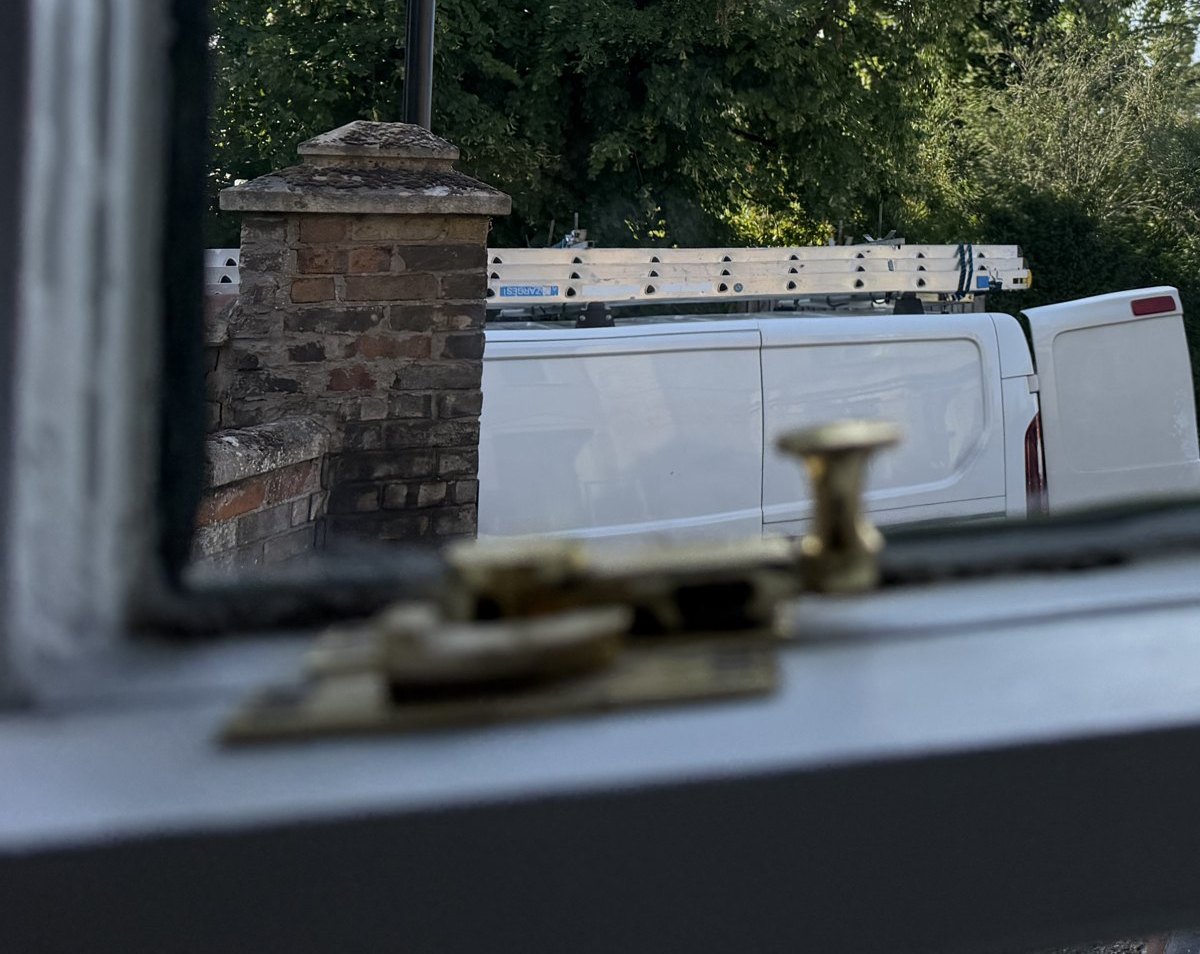
Brass fasteners on sashes we restored. Left: the meeting rails of a six-over-six near Baldock, Hertfordshire. Right: a sash in Diss, Norfolk.
Glass: the other weak point
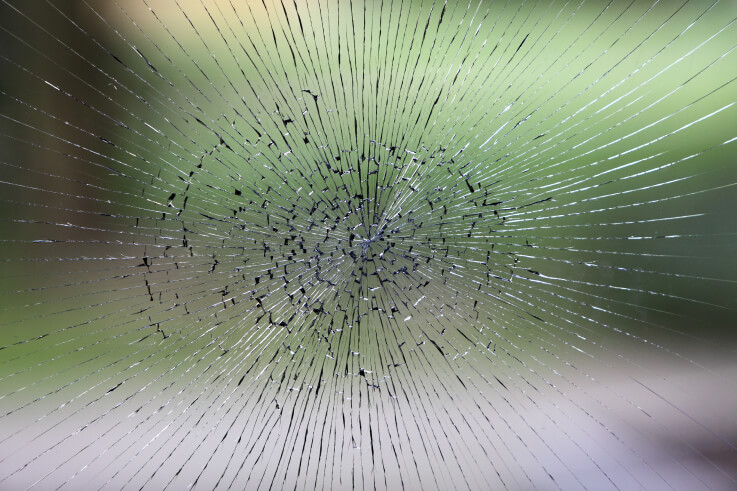
Old, thin window glass breaks easily, and a burglar who breaks a pane can reach in to a fastener that does not lock. That is the main reason to choose key-operated locks. The glass itself can also be changed without changing the look of the window: laminated glass holds together when it is broken, and toughened glass is much harder to break.
When we double glaze an existing sash with vacuum glass, about 8 mm thick, it is toughened or laminated where building regulations ask for it. More on our sash window double glazing page.
Timber or uPVC: which sash windows are more secure?
New uPVC sash windows usually come with multi-point locking, and since October 2015 the windows of new homes in England that can be reached from the ground (within 2 m of it) must meet the PAS 24 security test under Approved Document Q of the Building Regulations. That rule covers new homes only: replacement windows and existing homes are not included, and timber sash windows are made to PAS 24 too.
For an original timber sash the answer is the one above: sound timber, a good fastener and a key-operated lock or stops. That keeps the window you have, with its glass and glazing bars, and makes it as hard to open from outside as it needs to be.
How to fit sash window locks
Most sash locks are a straightforward job with a drill, a bradawl and a screwdriver:
- Close the sashes so the meeting rails line up, and check that they slide freely first.
- A fastener: hold it across the meeting rails, the keeper on the upper sash and the body on the lower, check that it closes snugly, mark the screw holes, make pilot holes and screw both parts on.
- Dual screws: drill through the inner meeting rail into the outer one with the bit size the maker gives, stopping short of the outside face, tap in the barrels and check the screw turns home.
- Sash stops: drill into the side of the frame just above the closed lower sash, fit the receiver and test the bolt; add a second pair higher up for a safe ventilation gap.
- Restrictors: follow the maker’s instructions for the gap, under 100 mm, and make sure an adult can release them.
Never paint over a lock or fastener. Take the ironmongery off before painting, as we do on our jobs (on a house in Ely the original door furniture and ironmongery were removed or masked off before decorating); it saves masking and the finish is far neater. Paint in the slots of a sash stop or the thread of a dual screw stops it working.
Sash lifts, handles and other sash furniture
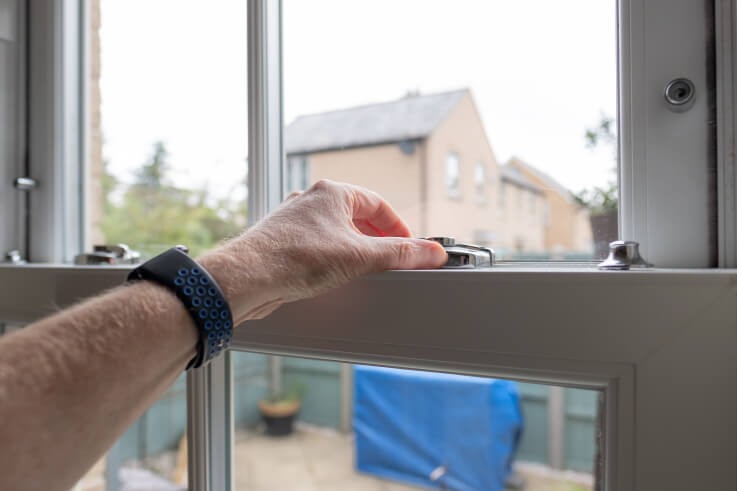
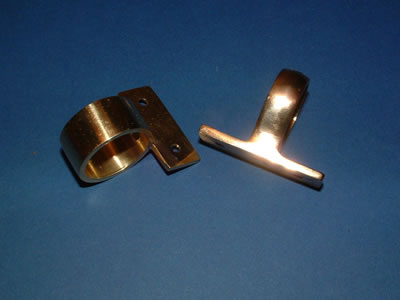
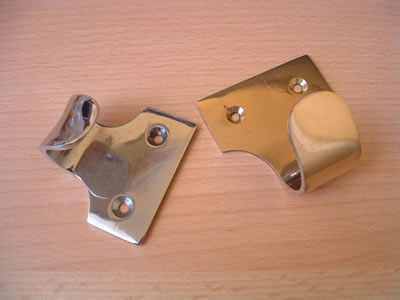
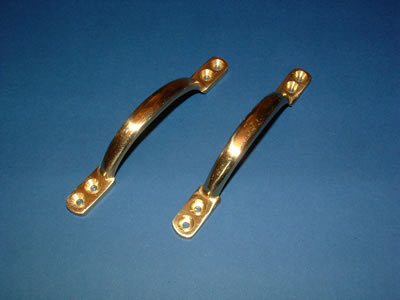
Locks are only part of the ironmongery on a sash window. Lifts and handles on the lower sash give you something to pull on, so the sash rises straight and the fastener is not used as a handle.
What sash window locks cost
Prices for the parts at UK ironmongers when we checked, in October 2026, before delivery:
| Lock | Typical price |
|---|---|
| Fitch fastener, plain brass | About £5 |
| Fitch fastener, premium solid brass | £69–£83 |
| Key-locking sash fastener | About £22 |
| Sliding sash window lock, Chubb WS1 | From £49 + VAT |
| Key-flush sash stop, From The Anvil | About £24 each |
Brands you will find include Samuel Heath, Carlisle Brass and From The Anvil for traditional brass fasteners, and Chubb, Bramah, ERA, Yale, Defender and BURG-WÄCHTER for locks and stops.
Frequently asked questions
How do you lock a sash window?
Close both sashes fully so the meeting rails line up, then turn the fastener across into its keeper; on a Brighton fastener, screw the knob down. If the window has dual screws or sash stops, turn them home with their key. If the fastener will not reach its keeper, the sashes are not closing properly and need easing first.
Can you put locks on sash windows?
Yes. Any sound timber sash can take a fastener, dual screws, sash stops or restrictors, and none of them changes how the window looks from outside. On a listed building, ask your conservation officer before removing or replacing original fittings.
What are the best sash window locks?
For security, a good fastener on the meeting rails plus a pair of key-operated sash stops or two dual screws on every window that can be reached from outside. For a period look, a brass Fitch or Brighton fastener, in a locking version on downstairs windows.
What is a sash window keeper?
The keeper is the part of a fastener on the upper sash’s meeting rail: the hook, slot or receiver that the cam, arm or screw on the lower sash turns into. Fasteners are sold with their keeper as a pair.
Do window locks stop burglars?
They stop the easy way in. Most burglars are opportunists, and a window that is visibly locked with a key means breaking glass and climbing through it, which is slow and noisy. A lock is only as good as the timber it is screwed to, so the sash has to be sound.
Is a sash lock the same as a sash window lock?
No. In door hardware a sashlock is a mortice lock for a door, with a lever handle and a key. A sash window lock is a fastener, screw or stop that holds the sashes of a sliding sash window.

