


A wooden door sill is the hardwood board at the foot of an external door frame. It carries the frame, takes every footstep and sheds the rain that runs down the door, so it is usually the first part of a doorway to rot.
To replace a wooden door sill, cut the old one out in pieces, clean off the old sealant and glue, cut a new hardwood sill to fit, treat every face with wood preservative, glue and clamp it in place, finish it with wood dye and exterior varnish or a woodstain, and seal the joints. You do not need to take out the door or the frame.
We replace door sills as part of our window and door restorations, and these are the tools, timber and products we use, photographed on one of our jobs.
| What you need | |
|---|---|
| Timber | A hardwood: oak, or a mahogany-type wood such as sapele |
| Tools | A multi-tool or hand saw, crowbar, scraper and knife, a circular saw on a track, clamps and a sealant gun |
| Fixing | Exterior wood adhesive, held with clamps while it sets |
| Protection | Wood preservative on every face before fitting |
| Finish | Wood dye plus clear exterior varnish, or an extra-durable woodstain |
| The frame and door | Stay where they are |
What a door sill does, and why it rots first
In older houses the external door sill, often called the threshold, sits directly on the foundation or a brick step. Rain that hits the door runs down onto it and can pool there, it takes every footstep, and its end grain sits against the frame where water collects. So it wears and rots faster than any other part of the door frame.
A porch or a canopy over the door protects the door, frame and sill from the weather, but it is an expensive addition, and on a listed house it needs listed building consent, which may not be given. For most doors the answer is a well-protected new sill.


Our door sill replacement on a restoration job in a village outside Cambridge. More on the rotten casement windows restoration at the same house.
From our jobs
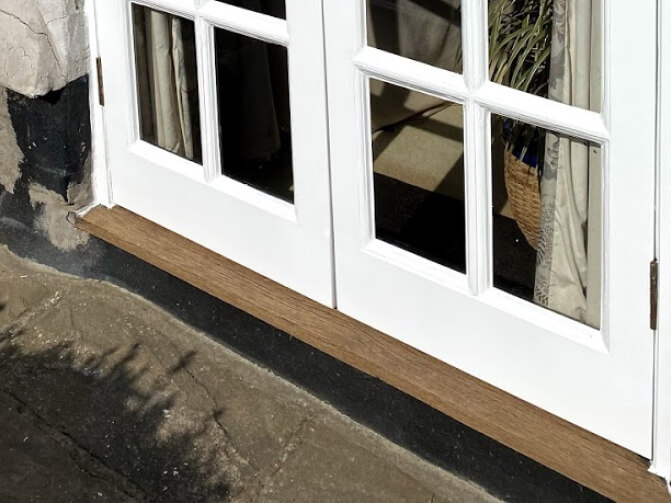
On this house outside Cambridge we were restoring the casement windows. The front door and its frame were sound, but the sill had rotted along its front edge, where the rain runs off the door. We cut out only the sill, fitted a new hardwood one, dyed it to match the old door and varnished it, with the door hanging in place throughout.
Repair or replace the door sill?
Push a screwdriver into the sill at the front edge and at both ends, where it meets the frame. Then decide:
- Repair it if the timber is sound apart from a soft patch or a split near the surface. Cut out the soft wood back to sound timber and fill it with an exterior two-part wood filler, then refinish. Our exterior wood filler guide covers the products and the method.
- Replace it if the screwdriver sinks in along the sill, the rot goes right through, the sill has split along its length, or water is getting under it into the floor. A new hardwood sill costs little next to the damage a leaking doorway does.
A like-for-like replacement needs no planning permission. On a listed building, check with your council’s conservation officer before changing the timber or the shape of the sill.
Choosing a new wooden door sill: timber, size and shape
A door sill is the one place where we use a dense hardwood, mahogany-type or oak, rather than the Accoya we use for sash window repairs. Accoya resists moisture and rot very well, but a doorstep needs a hard surface to stand up to daily wear.
| Timber | What it is like | Our view |
|---|---|---|
| Oak | Hard, heavy and hard-wearing; turns grey if left unfinished | A good choice for a sill that takes heavy use; use stainless steel or brass fixings, as oak stains black around iron |
| Mahogany-type hardwoods (sapele, meranti) | Reddish-brown, stable and easy to machine; the usual ready-made sill timber | A good all-round choice; takes dye and varnish well |
| Accoya | A modified softwood, very stable and resistant to rot | What we use for sash window repairs; softer underfoot than a hardwood, so less suited to a doorstep |
Size and profile
Builders’ merchants and timber yards sell ready-made hardwood sill sections, typically around 50 × 150 mm or 57 × 145–165 mm, in sapele, meranti, red grandis or oak, with a bevelled or sloping top. Before you buy, measure the old sill:
- Length between the two jambs of the frame, plus any part that runs under the jambs or into the brickwork.
- Depth from the front edge to the back, and how far it overhangs the step.
- Height at the back, where the door closes onto it, and at the front.
- Shape: the top should slope away from the door so rain runs off, and a groove under the front edge, a drip, stops water running back underneath. Note any rebate or groove for a weather bar.
You are unlikely to find an exact match for an old sill. Buy the nearest section and plane or saw it to fit, or have an online timber merchant cut a standard profile to size, which takes longer and costs more but needs fewer tools.
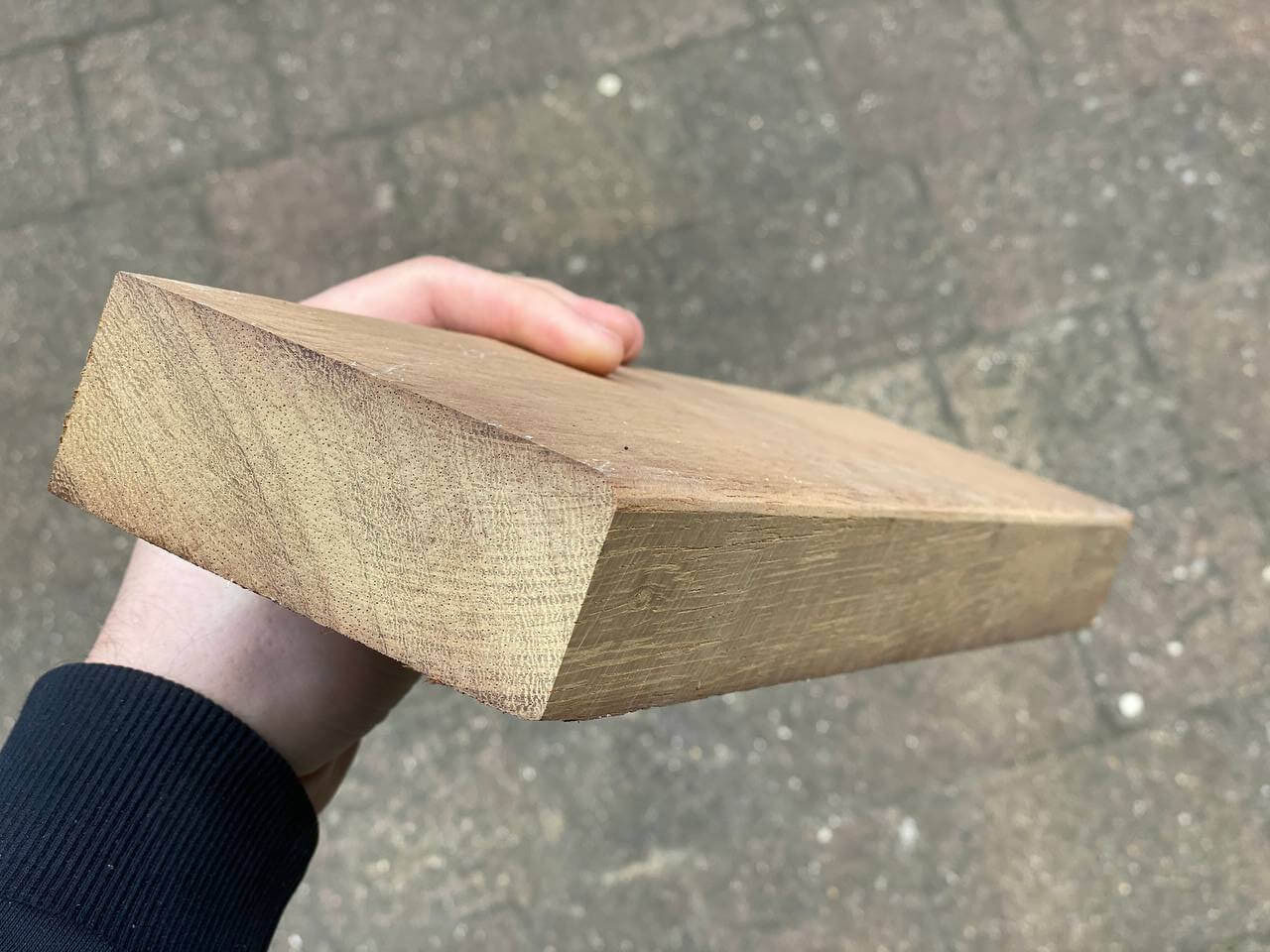
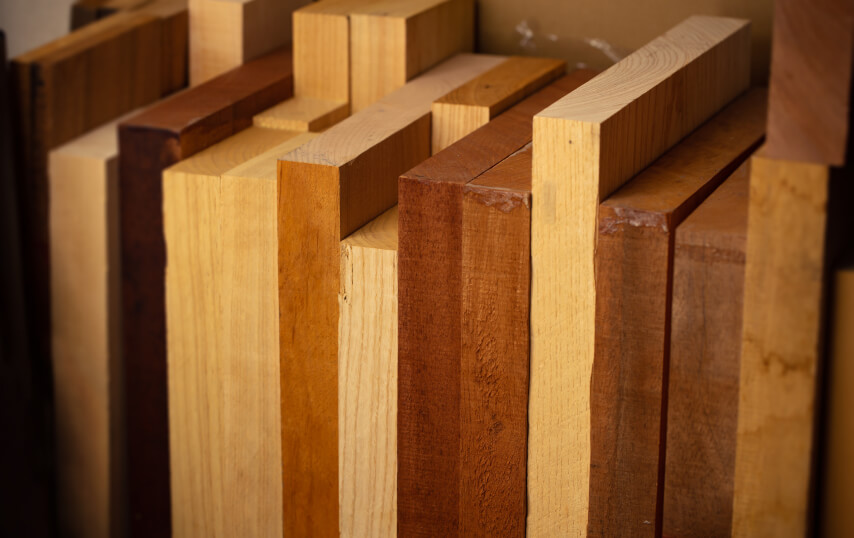
Buy the nearest standard section and cut it to the profile of the old sill.
Where to buy timber for a door sill
Hardwood sill sections and planks are sold by Travis Perkins, Ridgeons, Wickes, Homebase and B&Q, and by specialist timber merchants online, several of which cut a standard profile to your length.
Tools you need to replace a door sill
If you buy a sill that already matches your old profile, you only need tools to take the old sill out and to fix and seal the new one. If you buy a plain plank, you need a saw that cuts it accurately to width and length too.
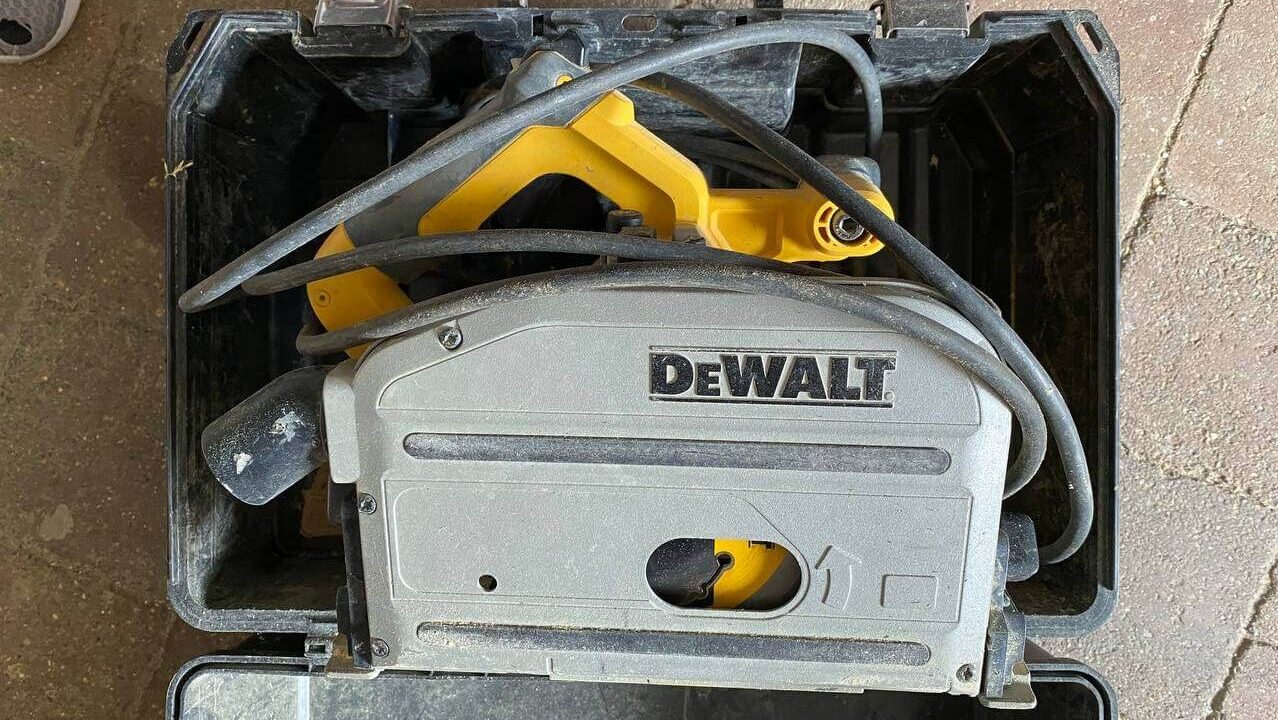
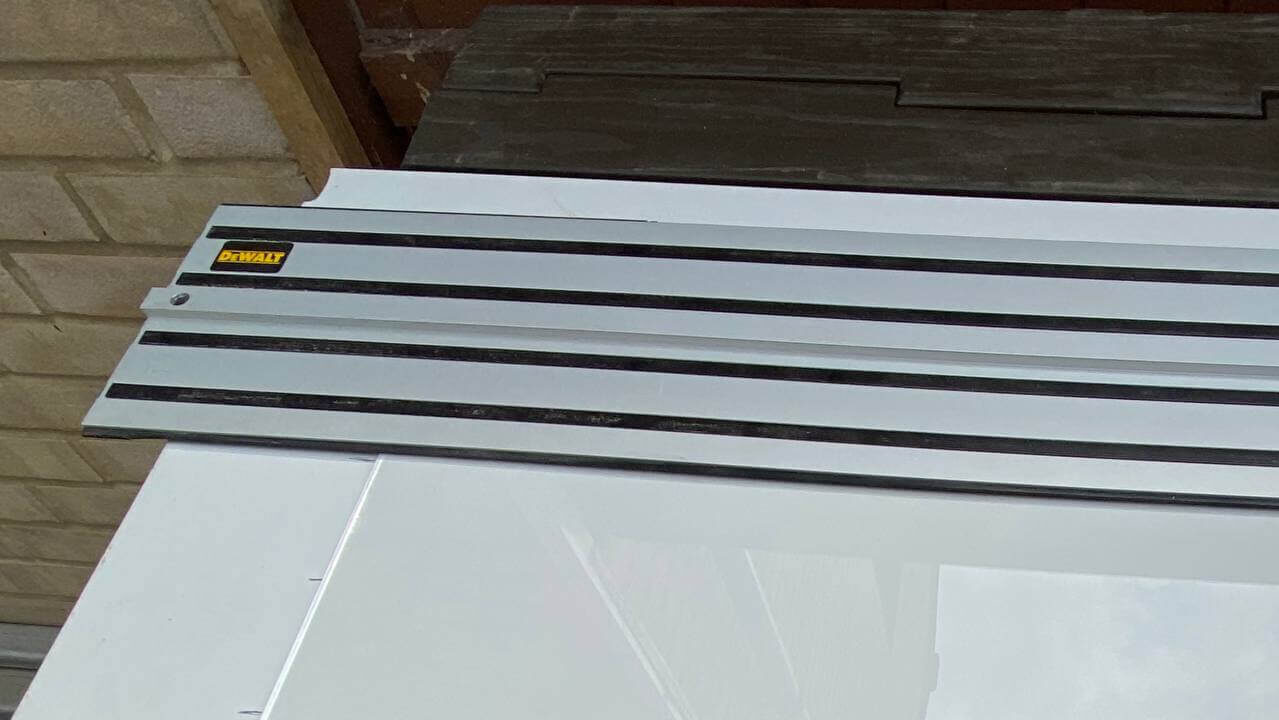
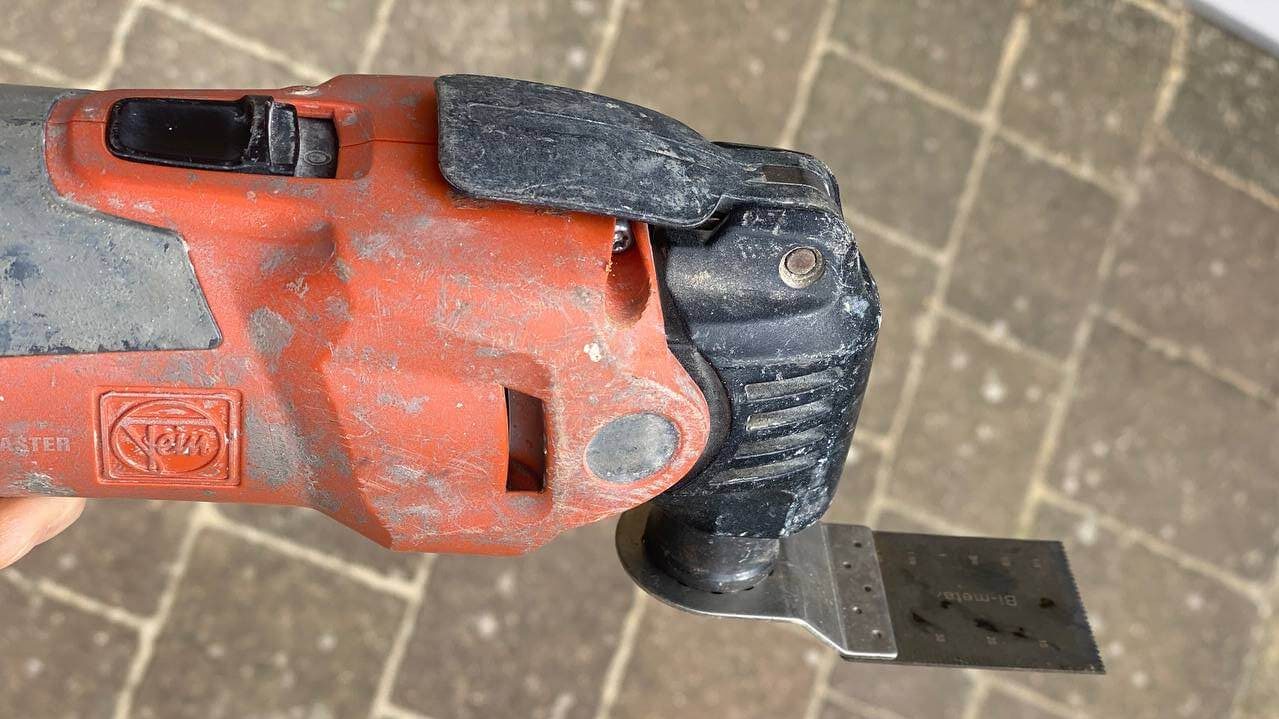
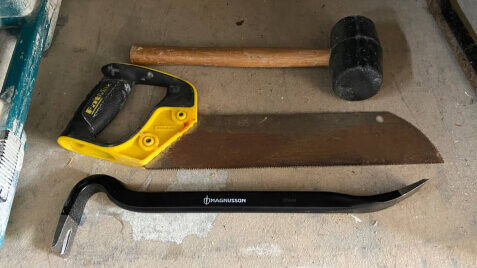
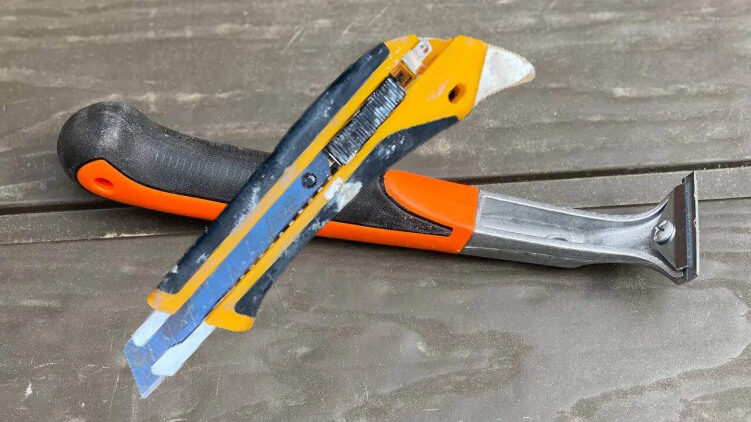
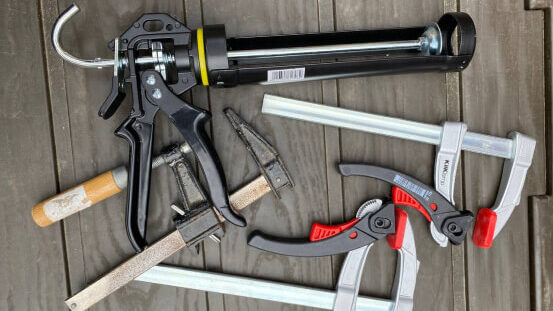
The tools we use for a door sill replacement.
- Circular saw and track: we use a DeWalt portable saw on its track to cut new timber accurately to length and width. The track must be the same brand as the saw; tracks and saws from different makers rarely fit.
- Multi-tool saw: a Fein multi-tool cuts the old sill out cleanly without touching the frame. It is the most useful tool for the job, but not the cheapest.
- Crowbar, hammer and hand saw: the budget alternative. Saw the old sill through and lever the pieces out; a wide chisel will do instead of a crowbar.
- Scraper and utility knife: to cut through old sealant and scrape off old glue.
- Two long clamps and a sealant gun: to hold the new sill while the adhesive sets, and to seal the joints afterwards.
How to replace a wooden door sill, step by step
1. Cut out the old door sill
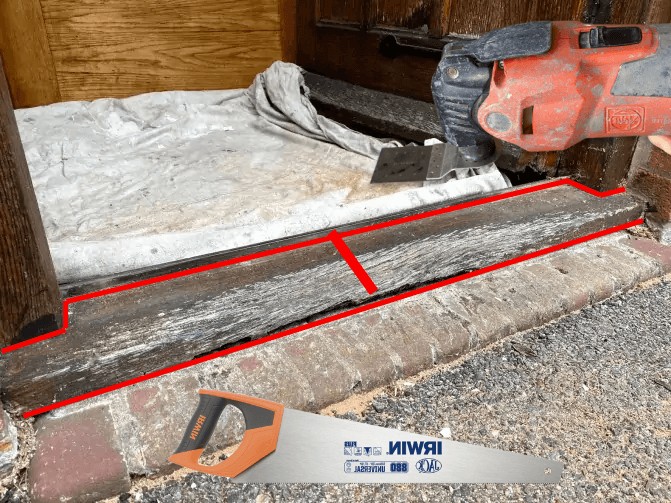
Cut the old sill through across the middle, and along the edges where it meets the frame and the step, with the multi-tool or a hand saw. Cut the old sealant with a knife. Then lever each half out with the crowbar, working it free from under the jambs rather than prising against the frame, so the frame is not damaged.
2. Clean off the old sealant and glue
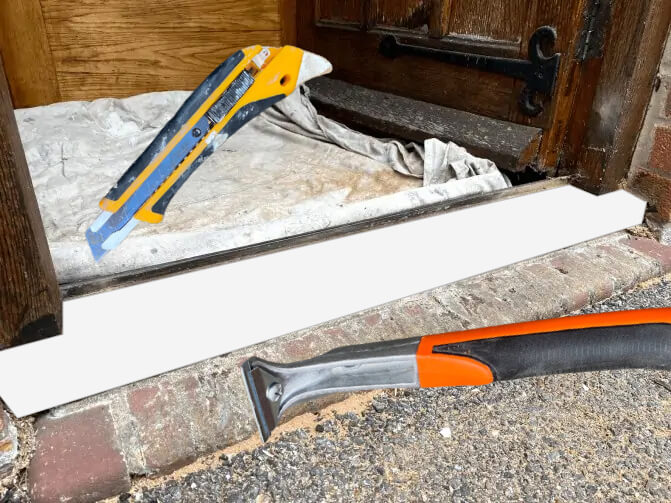
Scrape and cut away all the old sealant and glue from the step and the bottom of the frame. Brush out the dust, check that the brick or concrete under the sill is sound, and let it dry before the new sill goes in.
3. Cut the new sill to fit
Mark the new timber from your measurements and cut it to length and width with the circular saw on its track. Shape the ends to fit under the jambs and against the brickwork, and match the slope of the top and the drip underneath. Offer it up dry and trim until it sits tight to the frame and flat on the step, with the door closing onto it without catching.
4. Treat every face with wood preservative
Before the sill goes in, brush wood preservative onto every face, including the underside and the end grain, which are the parts you cannot reach once it is fitted and where water gets in first. Preservatives protect the timber against rot, mould and fungi, and they are clear, so you can dye or stain over them. The two we use:
- Sika Sikagard Universal Wood Treatment: protects against wet and dry rot and fungi, indoors and out; brush or spray; quick-drying and almost odourless.
- Gori 11 Wood Preservative: for outdoor wood, against blue stain, mould, fungi and insects; brush or spray, and compatible with all wood finishes.
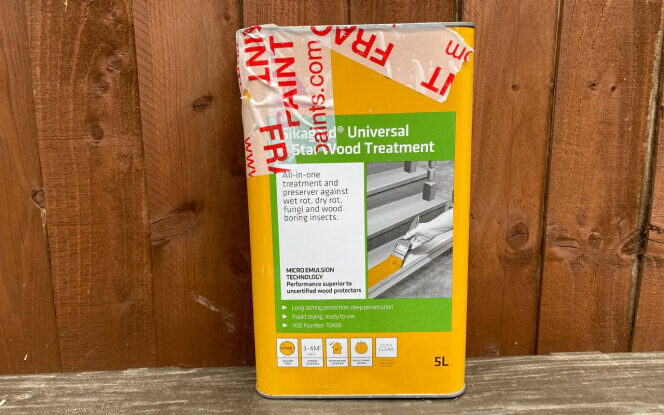
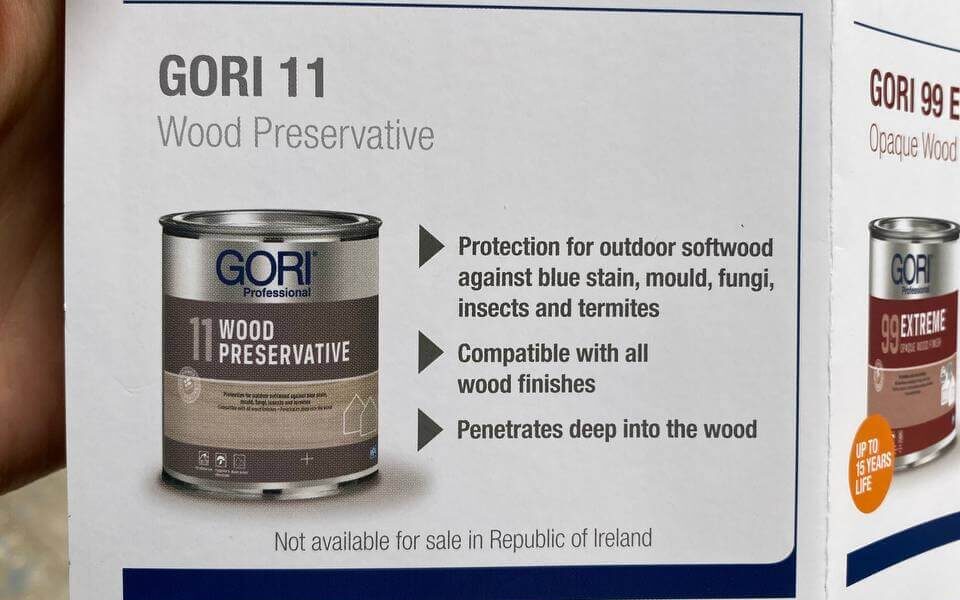
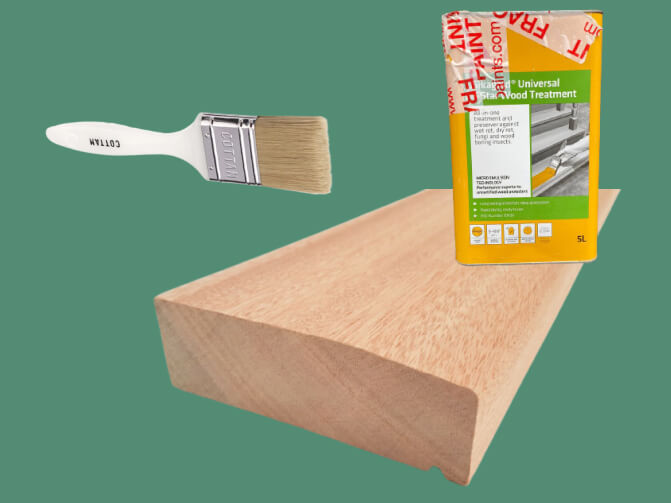
Let the preservative dry as the tin says before the sill goes in.
5. Glue and clamp the new sill in place
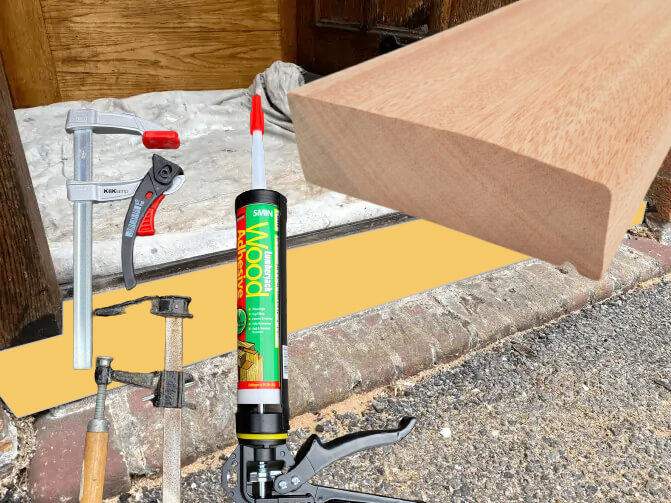
Run exterior wood adhesive, or a strong grab adhesive of the “no more nails” kind, along the step and the bottom of the frame. Set the sill in place and clamp it tight to the frame, checking it is still level and that the door closes. Leave the clamps on until the adhesive has set.
6. Apply the finish
Once the sill is fixed, give it its finishing coats. There are two ways:
- Wood dye, then clear exterior varnish. The dye colours the timber, so you can match the door frame exactly; the varnish protects it. The dye soaks into the wood, so scuffs show less. This is the option we prefer for a sill that takes heavy use.
- Extra-durable woodstain. Colour and protection in one product: simpler, and easy to recoat.
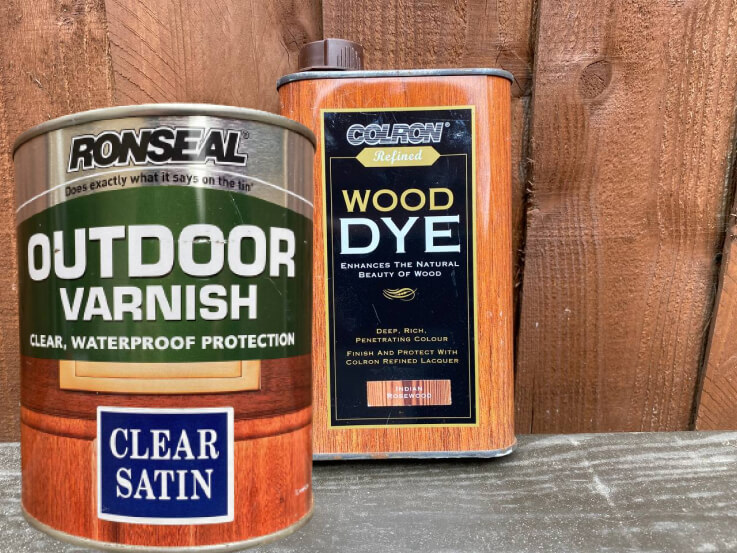
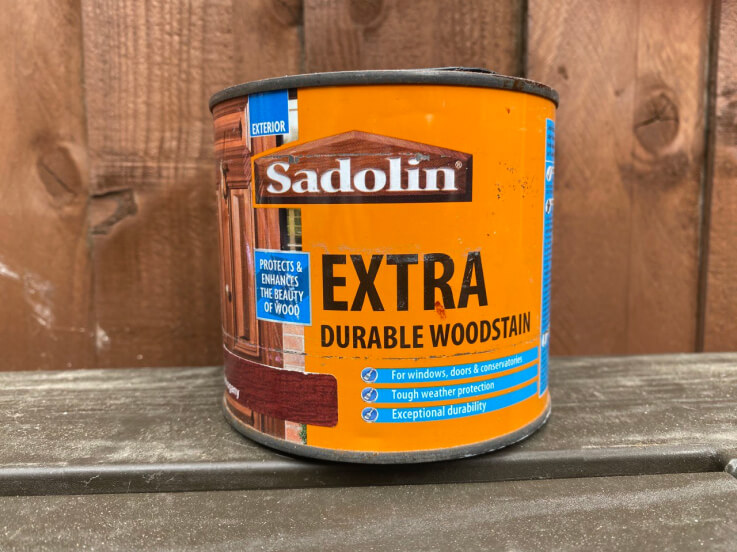
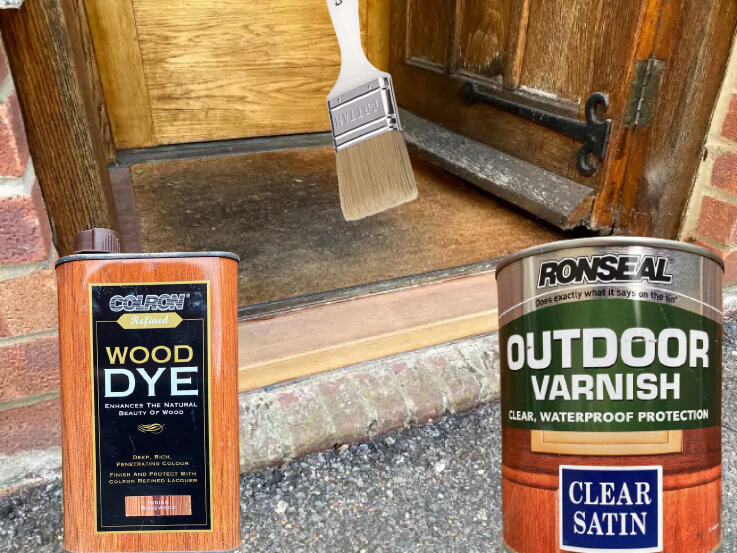
Option 1 is dye and varnish; option 2 is a woodstain.
7. Seal the joints
Run a clear, heavy-duty exterior sealant along every joint where the new sill meets the architrave, the frame and the brickwork, so rain cannot get behind or under it.
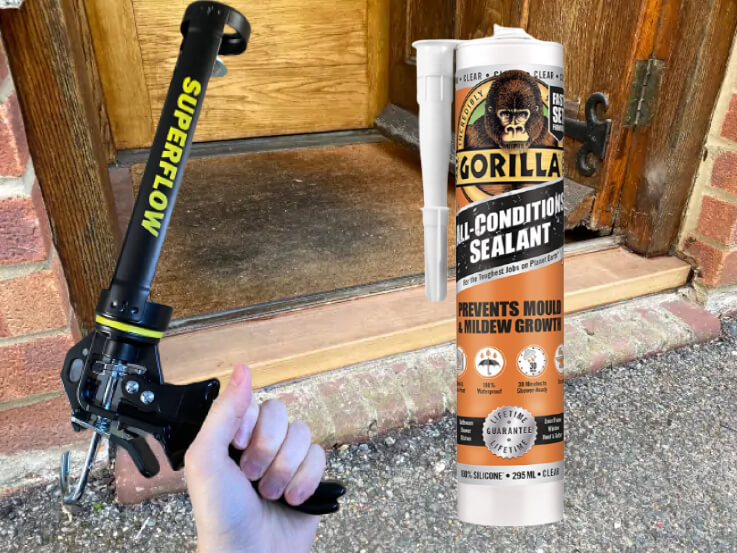
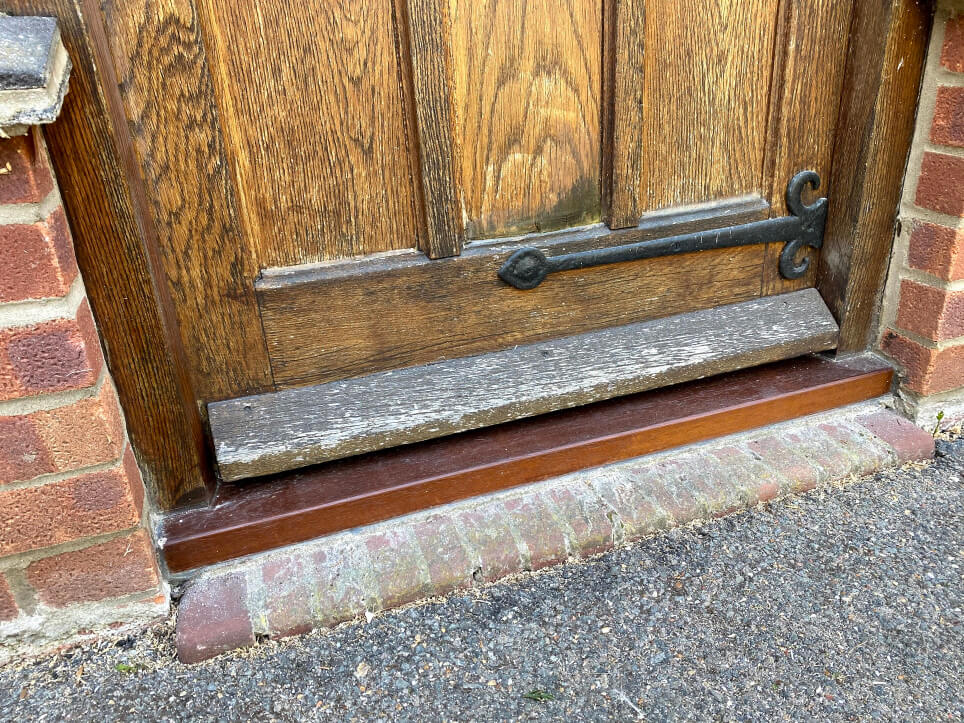
The joints sealed, and the new sill dyed and varnished to match the old door.
Five mistakes that make a new door sill rot early
| Mistake | What happens | Instead |
|---|---|---|
| Leaving the underside and ends untreated | Water soaks into the end grain and the face you cannot see, and the sill rots from the ends | Preservative on every face before fitting |
| A flat top, or no drip underneath | Rain sits on the sill or runs back under it | Keep the slope away from the door and the groove under the front edge |
| Fitting onto a wet step | The sill sits in damp from the first day | Let the brick or concrete dry before the sill goes in |
| Leaving the joints unsealed | Rain gets in where the sill meets the frame and the brickwork | Exterior sealant along every joint |
| Iron screws in oak | Black stains spread round each fixing | Adhesive, or stainless steel or brass screws |
Can you leave a wooden door sill to age naturally?
Yes. A dense hardwood such as oak or mahogany can be left to weather to silver-grey, and sometimes that suits an old house better than a varnished sill. Treat it with preservative before fitting all the same, and expect the surface to roughen and check a little over the years.
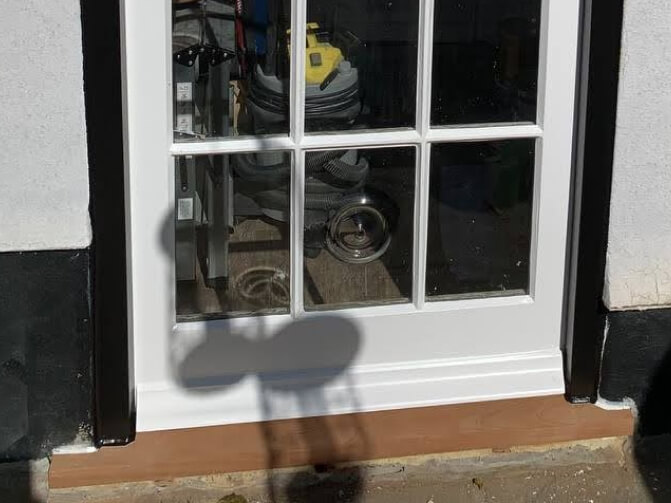
Two hardwood sills left unfinished.
Looking after a wooden door sill
- Recoat the varnish or woodstain as soon as it wears through where feet land, before water reaches bare wood.
- Check the sealant at the ends every autumn and replace any that has cracked or come away.
- Keep the drip groove under the front edge clear of paint and dirt, or water runs back under the sill.
- Do not leave a wet doormat on the sill: it keeps the timber damp.
We replace door sills as part of a window or door restoration rather than on their own. If the door itself, its frame or the windows need work too, see our front door restoration and sash window repair pages.
Frequently asked questions
What is a door sill?
The board or step at the foot of an external door frame, which the frame stands on and the door closes onto. It sheds rain away from the door. In the UK it is also called the threshold or cill, though a threshold can also mean a strip or bar across the floor of an internal doorway.
Can you replace a door sill without removing the door frame?
Yes. Cut the old sill through across the middle and along its edges, lever the pieces out from under the jambs, then slide in a new sill cut to fit and glue it in place. The door and frame stay where they are throughout.
What is the best wood for an external door sill?
A dense hardwood: oak, or a mahogany-type wood such as sapele or meranti, which most ready-made sills are made from. They stand up to footsteps and weather. Treat every face with preservative before fitting, and use stainless steel or brass fixings with oak.
What is the best finish for an exterior wooden door sill?
Wood dye followed by clear exterior varnish, or an extra-durable woodstain. Both protect the timber and are easy to recoat when the tread wears. Paint wears through quickly underfoot, so it suits a sill less well.
How do you fix a rotten door sill?
If the rot is a small patch near the surface, cut it out back to sound timber, fill with an exterior two-part wood filler and refinish. If a screwdriver sinks in along the sill, the rot goes through, or the sill has split, replace it.
How do you remove an old door sill?
Cut through the old sealant with a knife, saw the sill through across the middle and along its edges with a multi-tool or hand saw, and lever each half out with a crowbar or wide chisel. Scrape off the old glue and sealant before fitting the new sill.
Do you need permission to replace a door sill?
Not for a like-for-like replacement. On a listed building, check with your council’s conservation officer before changing the timber or the shape of the sill.

