


The best exterior wood filler for most outdoor repairs is a two-part epoxy resin such as Repair Care DRY FLEX, Timbabuild or Oxera Rebuild: it bonds to sound timber and stays flexible as the wood swells and shrinks. For deep holes that need to set fast, use a two-part polyester filler such as Ronseal High Performance; for nail holes and small cracks, a ready-mixed exterior filler is enough. On soft, rotten wood, cut it out and apply a wood hardener first.
We restore timber windows, so we see what happens to filler repairs a few years on. On a sash window, filler over rot usually cracks within two or three years. This guide covers every type of filler, the products worth using, how to make a repair last, and the jobs where filler is the wrong answer.
| The job | What to use | Examples |
|---|---|---|
| Nail holes, small cracks, dents | Ready-mixed exterior filler | Toupret Wood Filler |
| Deep holes and broken corners that must set fast | Two-part polyester filler | Ronseal High Performance |
| Rotten patches in doors, frames and fascias | Wood hardener, then an epoxy resin | Repair Care DRY FLEX, Timbabuild, Oxera Rebuild |
| Rot in a sash window’s bottom rail or sill | Cut out and splice in new timber, rather than fill | See the last section |
Epoxy resin: the best filler for rotted wood
A resin and a hardener react when mixed and cure into a strong, waterproof material that stays slightly flexible, so it moves with the timber instead of cracking away from it. Once cured it can be sanded, planed and drilled like wood. It costs the most and needs careful mixing, but for rotten timber outdoors it is the filler that lasts.
Repair Care DRY FLEX
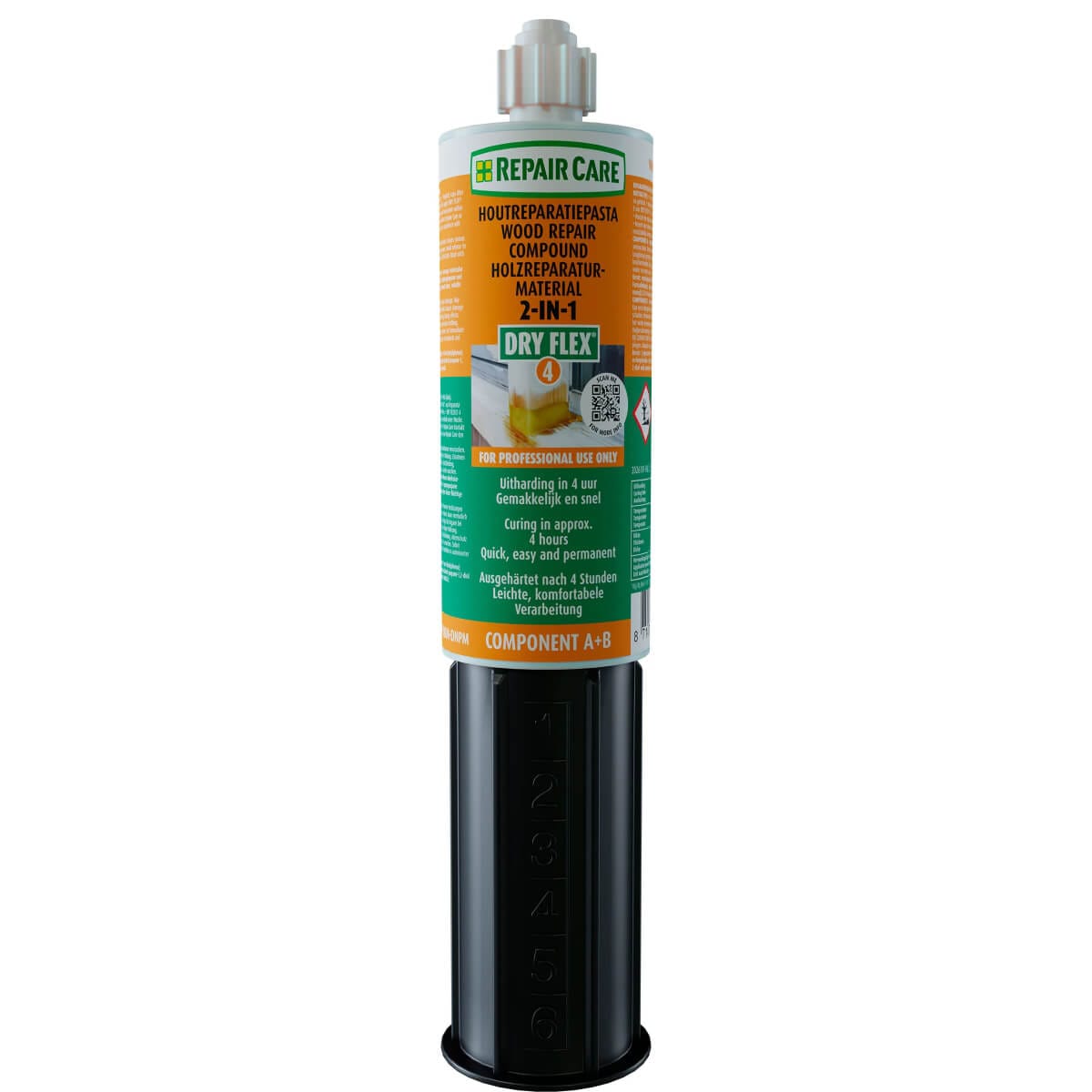
- Grades named after the approximate hardening time in hours at 20°C: DRY FLEX 1 for small repairs 5–10 mm deep, DRY FLEX 4 for repairs finished within a day, DRY FLEX 16 for larger projects.
- Two-part cartridges for a dispensing gun, from trade decorating merchants; often used by joiners on window repairs.
Timbabuild EHB60
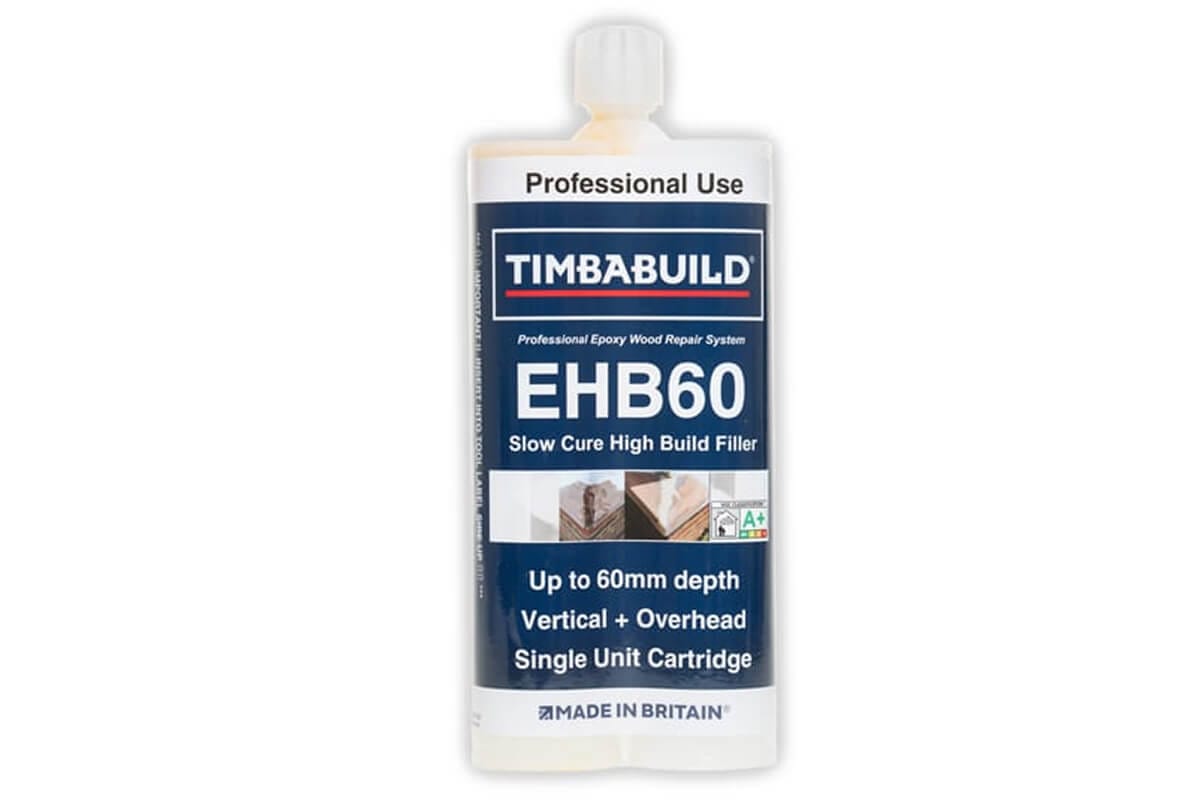
- British-made, for repairs up to 60 mm deep, vertical or overhead.
- Ready to paint in about four hours at 20–35°C; can be machined, drilled and screwed.
- Listed with a 50-year expected life; retailers advertise a 50-year guarantee, so check its terms.
Oxera Rebuild
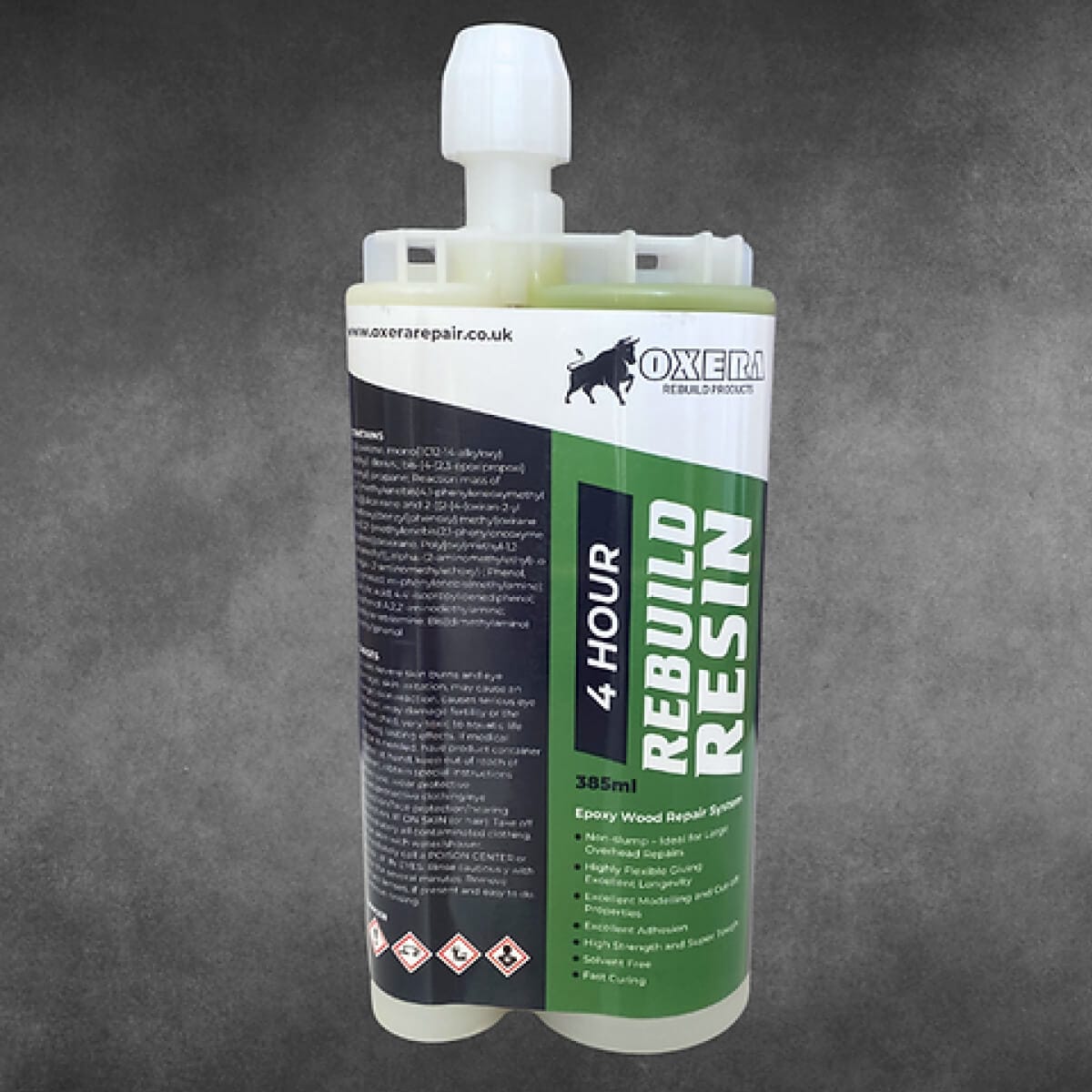
- Made in Mirfield, Yorkshire, in 1-hour and 4-hour resins, sold mostly direct.
- A 10-year guarantee when Oxera’s own stabiliser goes on the wood first.
| Repair Care DRY FLEX | Timbabuild EHB60 | Oxera Rebuild | |
|---|---|---|---|
| Hardening time | 1, 4 or 16 hours at 20°C | About 4 hours at 20–35°C | 1 or 4 hours |
| Guarantee or expected life | — | 50-year expected life | 10 years, with its stabiliser |
| Bought from | Trade decorating merchants | Trade merchants and online | Mostly direct |
Looking for an alternative to DRY FLEX? Timbabuild and Oxera do the same job with the same fast and slow grades. All three cure much more slowly in the cold, so in winter allow longer than the times on the pack.
Two-part filler for deep holes
A filler paste with a small tube of hardener: harder and quicker than epoxy, but more rigid, so on a joint that moves it can crack away from the wood. Good for deep holes and broken corners that must set fast.
Ronseal High Performance Wood Filler
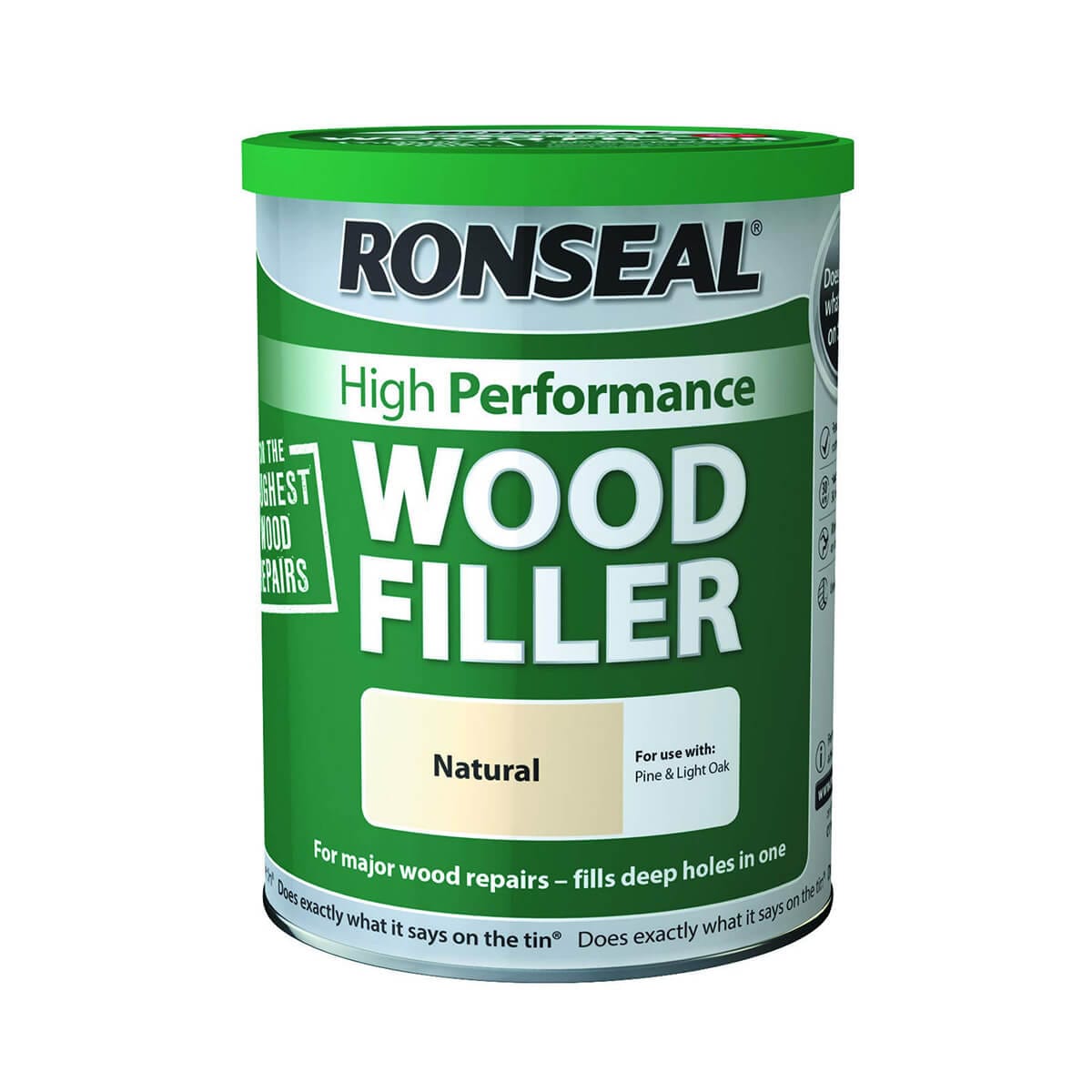
- Sets in about 30 minutes and fills deep holes in one application.
- Can be drilled, screwed, planed and sanded, then painted, stained or varnished.
- On rotten wood, use it over Ronseal’s Wet Rot Wood Hardener.
Ready-mixed filler for small holes and cracks
Ready to use from the tub and the easiest to sand, but not strong or flexible enough for a real repair, and it shrinks and cracks if laid on thick. Keep it for nail holes, dents and hairline cracks.
Toupret Wood Filler
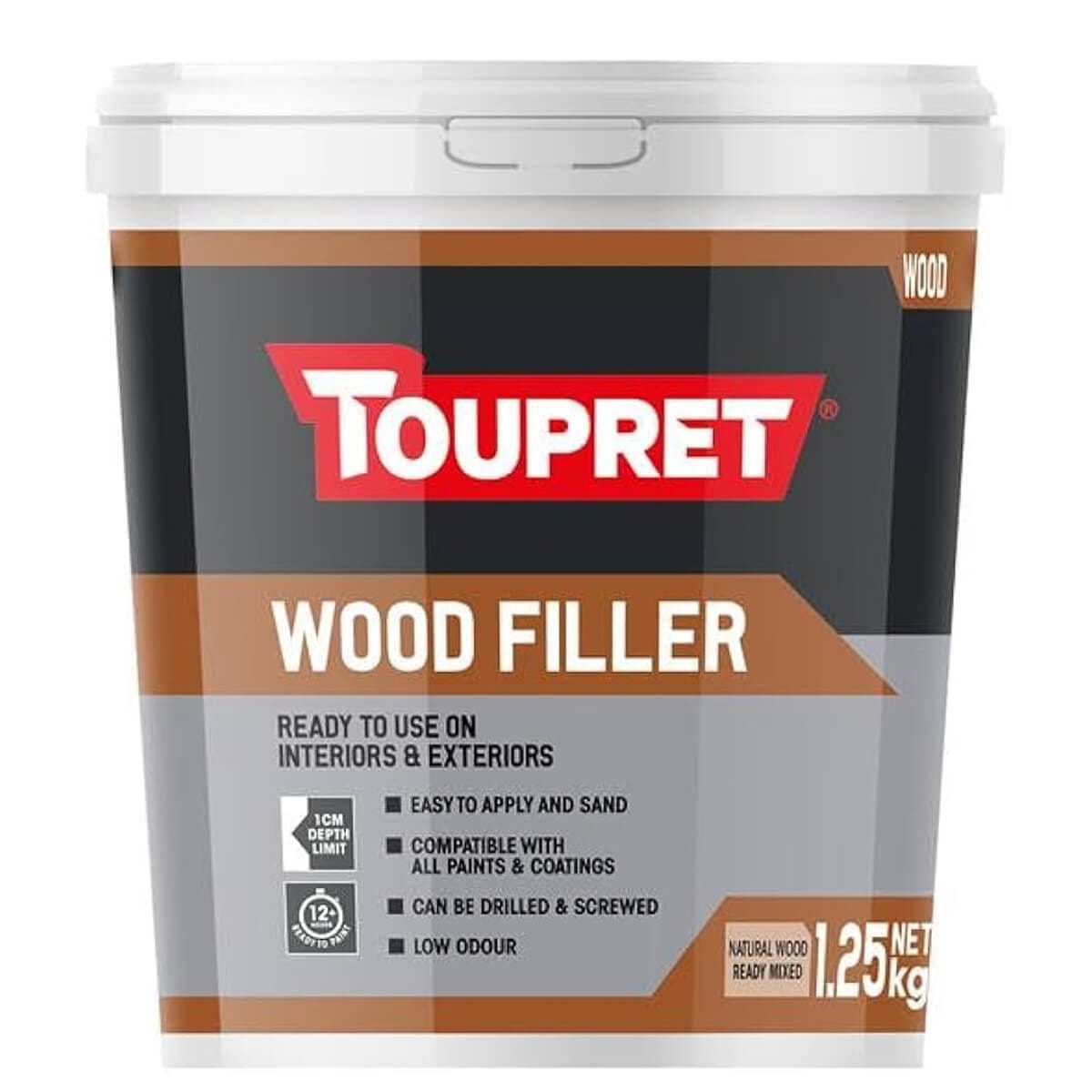
- For inside and outside; easy to apply and sand.
- Can be drilled and screwed, and takes any paint.
Wood hardener: the step most people skip
Not a filler but the step before one. Once the rot is cut out, a thin liquid soaks into the remaining soft fibres and sets, so the filler bonds to something firm. Filler put straight onto soft wood comes away with it.
Toupret Wood Hardener
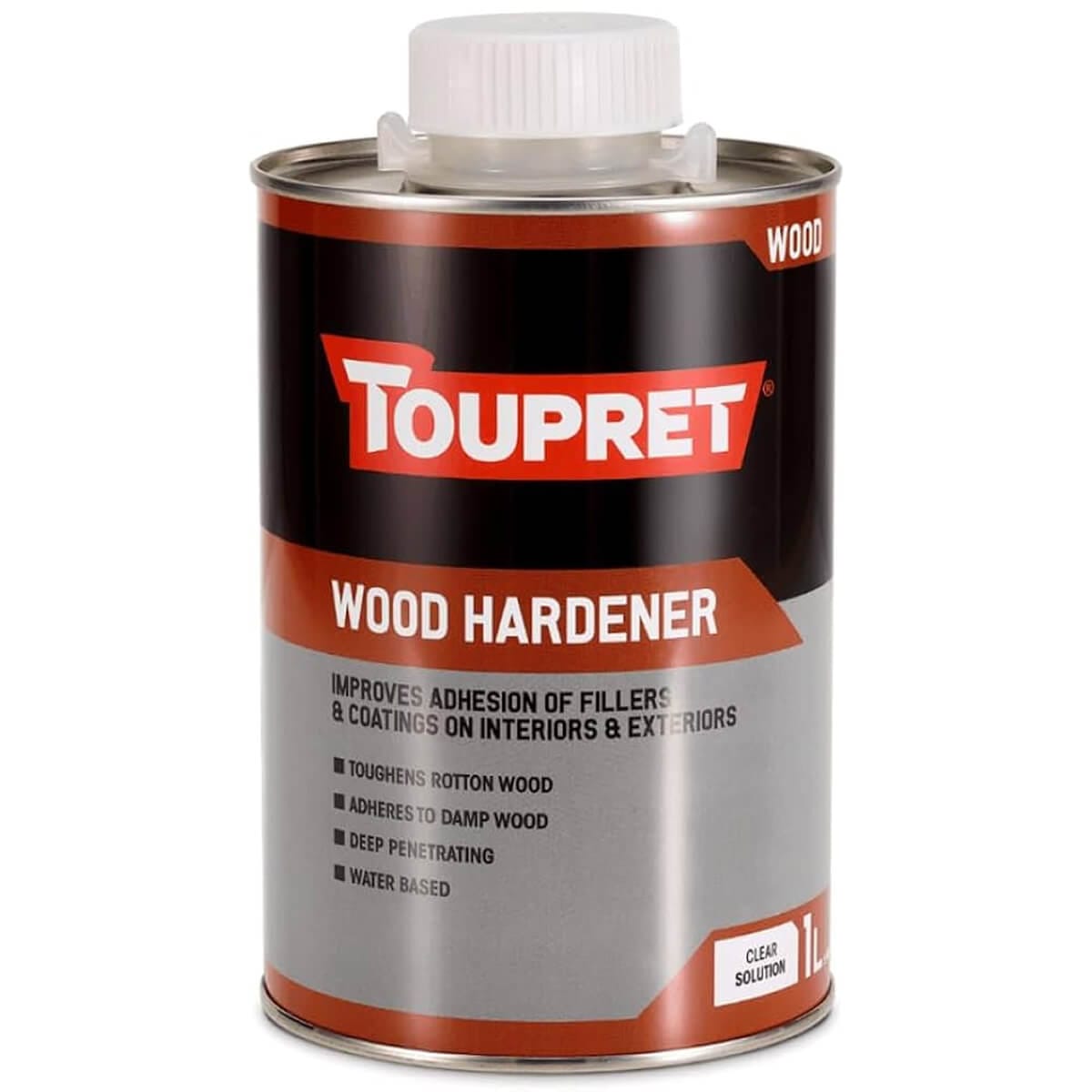
- Hardens rotten wood and improves the grip of fillers and paint, inside and out.
- Its tin says it adheres to damp wood, useful in a British winter.
How to repair rotten exterior wood with filler
The product matters less than the preparation. For a repair that lasts:
- Cut out all the rot. With a sharp chisel, scraper or multi-tool, remove every soft, crumbly fibre back to sound, hard timber. Rot left behind keeps spreading under the filler.
- Apply a wood hardener. Brush it on generously until the wood will take no more, and let it dry as the tin says.
- Mix and apply the filler. With a two-part product, mix only what you can use in its working time, often 5–10 minutes, until the colour is even. Press it hard into the hole to push out air, and leave it slightly proud of the surface.
- Shape it before it sets. Pare it close to the profile with a sharp knife or scraper while it is still soft; it saves a lot of sanding.
- Sand it flush. Once fully cured, sand with 80 or 120 grit, then 180 or 240 grit, until it is level with the wood around it.
- Prime and paint. Prime the repair even if the filler says it does not need it, then paint it with an exterior paint to keep the weather out.
Mistakes that make filler fail
- Filling over rot. Soft wood under the filler gives way, and the rot carries on underneath.
- Skipping the hardener. The filler bonds to loose fibres and lifts off with them.
- Ready-mixed filler laid on thick. It shrinks, cracks and comes away.
- Extra hardener to speed it up. The filler sets brittle and cracks.
- Not overfilling. Filler shrinks a little as it cures, and sanding takes more off, so a level fill ends up as a dip.
How long does exterior wood filler last?
As long as the wood around it stays sound. Ready-mixed filler on a nail hole in a painted door can outlast the paint. Filler over rot on a sash window usually cracks within two or three years, because the timber keeps moving and the rot keeps going underneath. An epoxy repair on well-prepared, hardened wood lasts far longer, which is why Oxera puts a 10-year guarantee on its system when its stabiliser is used, and Timbabuild lists a 50-year expected life. Keeping the paint intact over the repair matters as much as the filler itself.
When filler is the wrong fix: rot in sash windows
Filler is fine on a fence post, a fascia or a nail hole in a door. On a sash window it rarely lasts. The bottom rail, the meeting rail and the sill sit wet every time it rains, and the timber swells and shrinks with the seasons. A decorator’s filler repair, usually £370–£450 a window with the repaint, looks fine at first, but the filler shrinks and cracks within two or three years and the rot under the paint keeps going.
Joiners do better: they cut out the rot, screw in new pieces of timber and fill the gaps with a two-part resin such as DRY FLEX. But the screws and the filler still move with the wood, the paint cracks along the joins, and water gets back in.
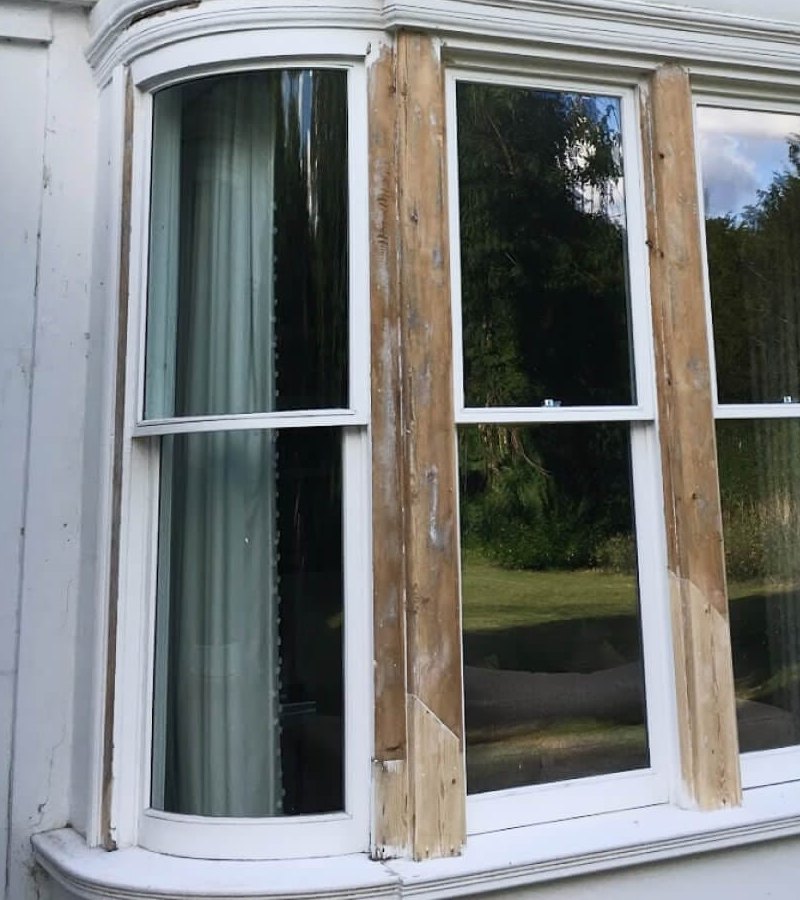
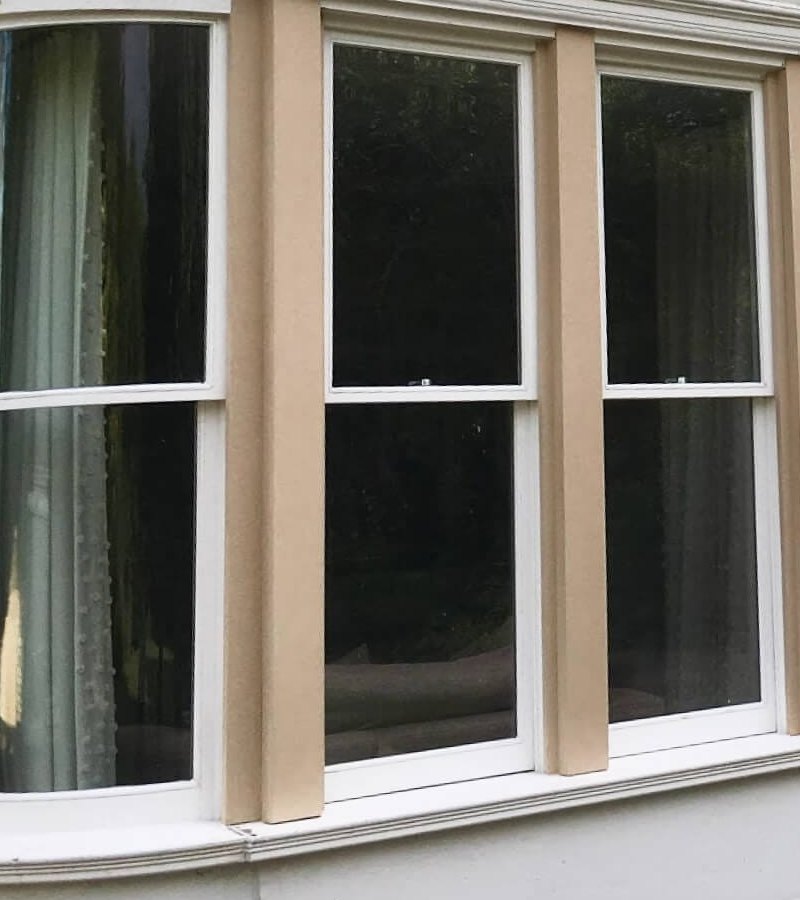
A curved sash bay on one of our jobs: the rot cut out and new wood spliced in, then laminated in Tricoya. No filler.
So on windows we use no filler. We cut the rot out, splice in new timber, and laminate the parts where water sits, the bottom rail, meeting rail and sill, in Tricoya, which its maker guarantees for 50 years against rot. Every timber repair carries our 20-year guarantee, and restoration starts at £650 a window, usually £770–£910.
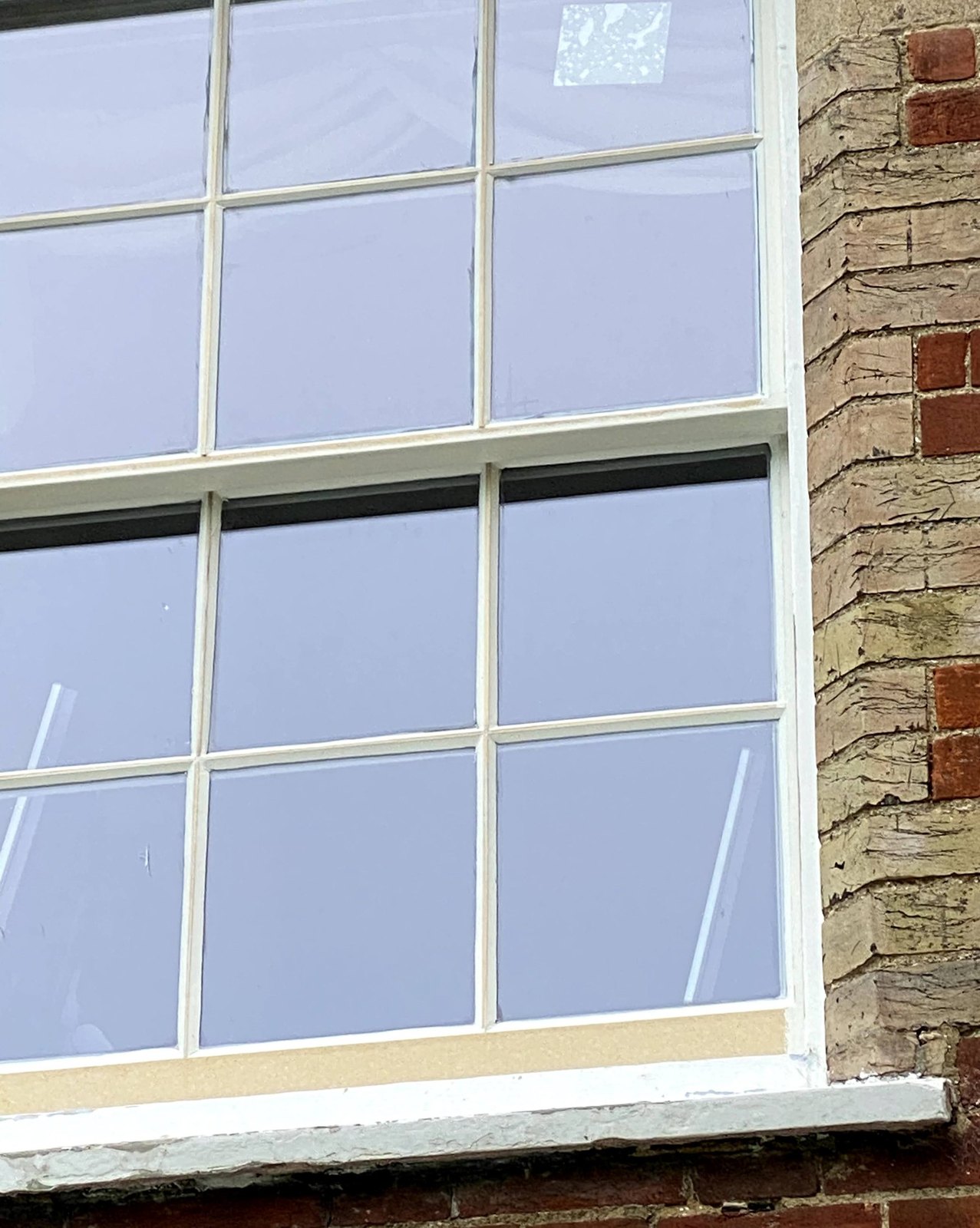
More on our sash window repair page.
Frequently asked questions
Can I use interior wood filler outside?
No. Interior fillers are not made for rain or for wood that moves with the weather, and they soon crack and wash out. Use a filler sold for exterior use: a ready-mixed exterior filler for small holes, a two-part filler or an epoxy resin for anything bigger.
Can you put wood filler over rotted wood?
Not straight over it. Cut out the soft, rotten wood back to sound timber, brush a wood hardener into what is left, and then fill with an epoxy resin. Filler over rot comes away with the soft fibres, and the rot keeps spreading underneath.
How long should I wait before painting over filler?
It depends on the product and the temperature. Two-part polyester fillers can be sanded and painted after about 30 minutes; epoxy resins take from about an hour to 16 hours, depending on the grade. Check the instructions on the pack.
Can you stain wood filler?
Some fillers take stain, but matching the wood around them is hard, because filler does not absorb stain like timber does. Choose a filler in the nearest wood colour and test it on an offcut. Painted repairs avoid the problem.
What is a good alternative to Repair Care DRY FLEX?
Timbabuild and Oxera Rebuild are both British epoxy wood repair systems for the same jobs, each with fast and slow grades. Timbabuild EHB60 is ready to paint in about four hours; Oxera makes 1-hour and 4-hour resins.
What is the best filler for repairing wooden window frames?
For nail holes and small cracks, a ready-mixed exterior filler. For rot, filler is a short-term fix: on sash windows it usually cracks within two or three years. A lasting repair cuts the rot out and splices in new timber.
Do I really need a wood hardener?
Yes, if the wood is at all soft after the rot is cut out. The hardener gives the filler a firm base to bond to; filler on soft wood is the most common reason repairs fail.


